 comparison
Best AI Chat Tools for 2026: A Review
Table of Contents
- What Artificial Intelligence Chat Tools Are
- How Conversational AI Works
- Top AI Chat Tools Compared
- AI Chatbot Examples and Real-World Use Cases
- Crafting Effective AI Chatbot Prompts
- AI Chatbot for Customer Service Applications
- AI Chatbot Privacy and Data Security
- Accuracy, Hallucinations, and Source Verification
- Frequently Asked Questions
Last Updated: October 12, 2026
What Artificial Intelligence Chat Tools Are
An artificial intelligence chat tool is software that uses machine learning and natural language processing to simulate human conversation. Unlike traditional chatbots that follow rigid decision trees, AI chat tools learn from interactions and adapt to context and intent.
The global conversational AI market reached $17.3 billion in 2025 and is projected to hit $20.7 billion in 2026, according to Research Nester's 2026 analysis. This growth reflects a fundamental shift in how businesses and individuals interact with technology.
For e-commerce teams, the value of AI chat tools extends beyond conversation: automating customer objections, capturing leads, and recovering abandoned sessions. The right AI chat tool bridges the gap between your paid traffic and your conversion rate.
How Conversational AI Works
Conversational AI begins with language understanding and ends with a generated response.
The architecture relies on transformer models, which use attention mechanisms to weigh different parts of your input, letting the system maintain context across longer conversations. Modern AI chat tools like ChatGPT return contextually relevant answers within seconds.
One critical distinction: conversational AI doesn't truly "understand" in the human sense. It recognizes patterns and statistical relationships in text, which is why these systems can hallucinate and why source verification remains essential.
For customer service, conversational AI excels at pattern matching: it identifies customer intent (refund request, product question, complaint) and routes or responds accordingly, learning which responses reduce friction over time.
Top AI Chat Tools Compared

The landscape of AI chat tools has consolidated around a few dominant players, each optimized for different workflows. We've evaluated the leading options on reasoning capability, ease of use, integration support, and real-world performance.
| Tool | Best For | Key Strength | Availability |
|---|---|---|---|
| NeuroAds Inc. Shopify AI Chatbot | E-commerce customer service & lead capture | Integrated objection handling and abandoned cart recovery | Shopify-native |
| ChatGPT | General-purpose reasoning and writing | Versatile across nearly all tasks | Web, mobile, API |
| Claude | Writing, coding, and structured analysis | Thoughtful, detailed responses | Web, mobile, API |
| Google Gemini | Google Workspace integration | Seamless connection to Gmail, Docs, Sheets | Web, mobile |
| Microsoft Copilot | Microsoft ecosystem workflows | Deep Windows and Office integration | Web, desktop, mobile |
NeuroAds Inc. Shopify AI Chatbot
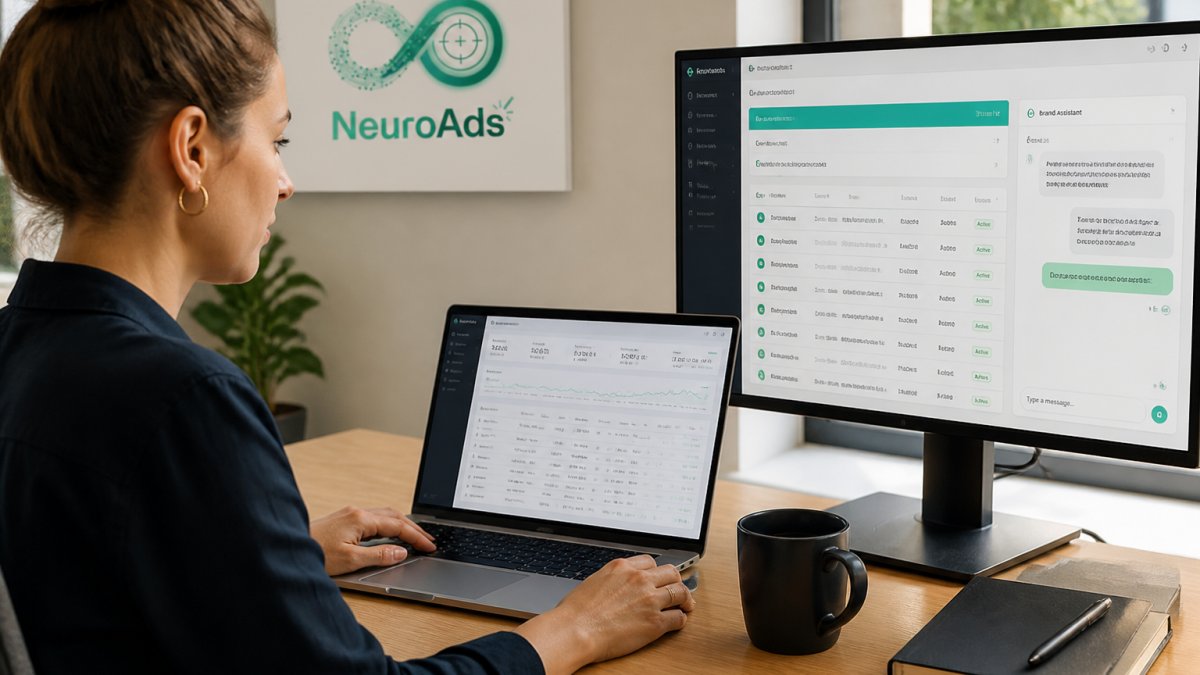
For e-commerce teams, the NeuroAds Inc. Shopify AI Chatbot stands apart because it's purpose-built for conversion, not general conversation. It integrates directly into your Shopify store and handles the friction points that kill sales: product questions, objection handling, and abandoned cart recovery.
Unlike generic chatbots, it understands your product catalog, customer history, and cart contents. When a shopper hesitates, it identifies the likely objection and responds with targeted information or incentives, improving ROAS by converting browsers who would otherwise leave.
The platform connects to your NeuroAds Inc. AI Advertising Platform, creating a closed loop from ad click to purchase: targeting and creative data inform how the chatbot responds, and chatbot interactions feed back into your audience insights.
Standout capability: Automated objection handling that references real product data and customer purchase history, not generic responses.
ChatGPT
ChatGPT dominates the AI chatbot market with 80.47% market share as of September 2026, according to Statcounter's global AI chatbot analysis. This dominance reflects its versatility across writing, coding, analysis, reasoning, and creative tasks.
For research, brainstorming, and problem-solving, ChatGPT's ability to follow multi-step logic and maintain context makes it the default choice for most users.
The tradeoff: ChatGPT is general-purpose, not specialized. Deep integration with your business systems or product-specific knowledge requires significant customization.
Best for: Teams seeking a versatile AI chat tool for writing, analysis, coding, and general problem-solving across multiple workflows.
Claude
Claude specializes in writing and structured analysis, making it the preferred choice for teams that prioritize thoughtful, detailed responses over speed. It handles complex document analysis, coding, and multi-step reasoning with particular strength.
Compared to ChatGPT, Claude produces more deliberate, nuanced outputs, meaning fewer iterations and higher-quality first drafts. It's also known for more transparent reasoning, explaining its logic rather than jumping to conclusions.
The limitation: Claude is slower than ChatGPT and less versatile across casual conversation, though its strength in structured thinking justifies the tradeoff for specialized workflows.
Best for: Content creators, researchers, and developers focused on writing quality and analytical depth over response speed.
Google Gemini
Google Gemini integrates directly with the Google Workspace ecosystem, Gmail, Docs, Sheets, and Drive, making it the logical choice for teams already invested in Google's productivity tools. This native integration lets the AI chat tool access your stored documents and data directly.
For Google Workspace organizations, Gemini's ability to search email history, summarize documents, and generate insights from your own data creates genuine efficiency gains, since Gemini already knows your context.
The tradeoff: Gemini's reasoning lags slightly behind ChatGPT and Claude on complex, multi-step problems. It shines when your workflow is already Google-native.
Best for: Organizations using Google Workspace who want AI chat capabilities that reference their own documents and email without manual copying.
Microsoft Copilot
Microsoft Copilot is the enterprise option, with deep integration into Windows, Office 365, and Microsoft's cloud services. For Microsoft-standard teams, it offers context awareness of your files, emails, and meetings that generic chatbots cannot match.
Copilot's strength is productivity automation within the Microsoft ecosystem: summarizing Teams meetings, drafting emails from conversation context, and analyzing Excel data without exporting and reimporting information.
The limitation: Copilot's reasoning and writing quality don't match ChatGPT or Claude on the same tasks. It's optimized for productivity within Microsoft's ecosystem, not general-purpose AI chat excellence.
Best for: Enterprise teams standardized on Microsoft infrastructure who prioritize ecosystem integration over standalone capability.
AI Chatbot Examples and Real-World Use Cases
The most effective AI chat tool applications solve specific business problems rather than replace human judgment. Here are concrete examples where these tools deliver measurable value.
Content acceleration: A marketing team uses Claude to analyze competitor content, identify gaps, and generate blog outlines. The AI chat tool eliminates the blank-page problem and research phase.
AI Performance Marketing Platform →
Abandoned cart recovery: The NeuroAds Inc. Shopify AI Chatbot identifies shoppers who added items but didn't complete checkout, engaging them with personalized messages referencing their cart contents and relevant incentives.
Code debugging: A development team uses ChatGPT to explain error messages and suggest fixes.
These examples share a common pattern: the AI chat tool handles high-volume, low-complexity tasks, freeing human expertise for decisions that require judgment or creativity.
Crafting Effective AI Chatbot Prompts
The quality of an AI chatbot response depends almost entirely on prompt quality. A vague question produces a vague answer. A specific, well-structured prompt produces focused, actionable output.
Effective prompts follow a consistent structure: context, task, constraints, and expected output format. Tell the AI chat tool what it needs to know, what to do, any limitations to respect, and the desired response format.
Example: Instead of "Write a sales email," try this:
"You are writing a sales email to a Shopify store owner who has been running ads for 6 months but hasn't optimized their conversion funnel. They're skeptical of new tools. Write a 150-word email that acknowledges their skepticism, explains one specific way our platform improves ROAS, and includes a clear call to action. Use a professional but conversational tone."
The second prompt delivers a focused response because it specifies audience, context, skepticism, length, and tone, so the AI chatbot knows exactly what success looks like.
For customer service, effective prompts include product-specific information and customer context. A chatbot trained on your product catalog, pricing, and policies responds with specificity that feels personal.
AI Chatbot for Customer Service Applications
Customer service is where AI chatbots deliver the highest ROI for most businesses, handling volume, reducing response time, and improving consistency, three metrics that directly impact satisfaction and retention.
The strongest implementations combine AI chatbots with human escalation: the system answers straightforward questions and resolves simple issues, then escalates to a human agent with full context captured when needed.
For Shopify stores, integrating an AI chatbot reduces friction at the moment a customer is most engaged, while browsing your products.
The NeuroAds Inc. Shopify AI Chatbot automates objection handling at scale.
AI Chatbot Privacy and Data Security
For consumer-facing tools like ChatGPT, OpenAI retains conversation data by default, though you can opt out; the data improves the model and detects abuse.
For enterprise tools like Microsoft Copilot, data retention policies are more restrictive, and Microsoft commits to not using your business data to train public models.
For the NeuroAds Inc. Shopify AI Chatbot, customer data stays within your Shopify environment.
When selecting an AI chat tool for business use, verify the vendor's data retention policy, request a Data Processing Agreement (DPA) if handling customer data, and confirm whether your data trains the model.
Accuracy, Hallucinations, and Source Verification
AI chatbots hallucinate, generating plausible-sounding but factually incorrect information.
For tasks where accuracy matters, legal advice, medical information, financial guidance, AI chatbots should not be your only source.
The risk varies by tool. ChatGPT and Claude are trained on broad internet data and can hallucinate about recent events or specialized topics.
When using an AI chat tool for business decisions, treat it as a research assistant, not an oracle, and verify critical facts independently.
According to Chatbot.com's 2026 industry analysis, accuracy and source verification remain the top concerns for businesses deploying AI chatbots at scale.
For e-commerce teams, the highest ROI comes from integrating an AI chat tool into your customer journey. Shopify AI Chatbot automates the friction points that kill conversions: product questions, objection handling, and abandoned cart recovery.
Get started with the NeuroAds Inc. Shopify AI Chatbot and transform how you handle customer conversations at scale.
Frequently Asked Questions
How can I chat with artificial intelligence?
Most AI chat tools are accessible through web browsers or mobile apps. Visit the tool's website (ChatGPT, Claude, Google Gemini, or Microsoft Copilot), create an account, and start typing your questions. Many offer free access to basic features, while premium plans unlock faster responses and advanced capabilities. Mobile apps are available on iOS and Android for convenient on-the-go conversations.
What are practical examples of AI chatbot use?
AI chatbots handle content generation, code debugging, customer service responses, homework explanations, creative brainstorming, email drafting, and research summaries. Businesses use them for lead qualification, FAQ automation, and objection handling. Students use them for learning support. Professionals use them for writing assistance, data analysis, and workflow optimization. Real-world applications span customer support, marketing, education, and software development.
Can AI chatbots answer questions accurately?
AI chatbots provide accurate answers for many topics, but they can hallucinate (invent plausible-sounding false information). Accuracy varies by tool and task. ChatGPT, Claude, and Google Gemini generally perform well on factual questions when trained data is recent. Always verify critical information, especially for medical, legal, or financial advice. Cross-reference answers with authoritative sources. Newer models tend to have lower hallucination rates than older versions.
What should I avoid sharing with an AI chatbot?
Avoid sharing passwords, financial account details, social security numbers, health records, or proprietary business information. Don't input personal data you wouldn't want stored or used for model training. Be cautious with confidential client information or trade secrets. Most AI chatbots retain conversation history for service improvement. Check privacy policies before sharing sensitive information. For business-critical data, consider enterprise versions with stronger data protection guarantees.
How do AI chatbots help with customer service?
AI chatbots provide instant responses to common questions, reducing wait times and support costs. They handle FAQ routing, appointment scheduling, order status inquiries, and basic troubleshooting 24/7. Advanced chatbots identify when to escalate complex issues to human agents. They gather customer information before handoff, streamlining resolution. Integration with CRM systems enables personalized responses. For e-commerce, chatbots recover abandoned carts and handle objection handling automatically, improving conversion rates and customer satisfaction.