 comparison
Best AI Chatbot Online: Top Tools Compared
Table of Contents
- What Makes the Best AI Chatbot Online
- Top AI Chatbot Examples and How They Compare
- AI Chatbot for Customer Service: Enterprise and Business Use
- AI Chatbot Comparison: Features, Pricing, and Access
- Why Adoption Is Growing: Market Trends and Real-World Use
- How to Choose the Right Online AI Chatbot for Your Needs
- Frequently Asked Questions
Last Updated: October 12, 2026
What Makes the Best AI Chatbot Online
The global AI chatbot market was valued at approximately $9-10 billion in 2025 and is projected to reach $27-32 billion Key Chatbot Statistics You Should Follow in 2026, signaling explosive growth in how businesses and individuals interact with AI.
The best AI chatbot online depends on your use case: one tool dominates general conversation and research, another leads on writing and coding, and a third category shines for businesses automating customer support.
Below, we compare the top AI chatbots, break down their features and pricing, and show you how to pick the right one.
Top AI Chatbot Examples and How They Compare
Most roundups describe each tool in isolation, which makes comparison impossible. Below, every tool is evaluated against the same five criteria: model access, free-tier limits, context handling, data policy, and best-fit task.

ChatGPT: General-Purpose Conversation and Assistance
ChatGPT remains the market leader for general-purpose AI chatbot online use. According to AI Chatbot Market Share Worldwide, ChatGPT held 80.47% of worldwide AI chatbot market share in the period from September 2025 to September 2026.
- Model access: OpenAI's GPT family, with the newest reasoning models gated behind paid tiers.
- Free-tier limits: A capped number of messages per window on the newest model, then automatic fallback to a lighter model. Heavy daily users hit the cap quickly.
- Context handling: Strong multi-turn memory within a session; long documents are supported but quality degrades on very large inputs.
The tradeoff: it's excellent at breadth but doesn't specialize. For writing marketing copy or debugging code, better-suited tools exist.
Claude: Writing and Coding Excellence
Claude, built by Anthropic, is the best AI chatbot online when writing and coding are your focus.
- Model access: Anthropic's Claude family, with the largest context windows reserved for paid plans.
- Free-tier limits: A daily message cap that resets on a rolling window; the most capable models are paywalled.
- Context handling: The standout strength. Claude can ingest long briefs, full research papers, and multi-file codebases in a single pass without losing track, a real advantage over generalist tools.
The downside: Claude lacks ChatGPT's brand recognition and user base. For casual conversation, ChatGPT remains faster and more intuitive.
Google Gemini: Free Access with Google Integration
Google Gemini offers the best free AI chatbot online option with deep integration into Google's ecosystem.
- Model access: Google's Gemini model family, with the newest Pro-tier models limited on the free plan.
- Free-tier limits: Genuinely usable, not a stripped demo, but peak-hour throttling and lower priority during high traffic.
- Context handling: Very large context windows, and it can pull from Gmail, Docs, and Drive when you grant access.
ChatBot.com: Business Customer Support Focus
ChatBot.com takes a different approach. Rather than a conversation interface you visit in a browser, it's a platform for building AI agents that live on your website, messaging apps, or help desk systems.
- Model access: Multi-model, you can route different tasks to different underlying LLMs.
- Free-tier limits: A time-limited trial rather than a permanent free plan, because it's a business tool.
- Context handling: Grounded in your own knowledge base and documentation, which reduces hallucination on company-specific questions.
- Data policy: Business-grade terms; your customer conversations are not used to train public models.
The tradeoff: ChatBot.com requires more setup than simply visiting a website and typing. You're building a tool for your customers, not using one yourself.
The Privacy and Data Question Most Roundups Skip
Before pasting anything sensitive into an AI chatbot online, know where the conversation goes. Three questions separate the tools:
- Is the chat stored? Consumer tiers of ChatGPT, Claude, and Gemini retain conversations by default. Business and API tiers typically do not.
- Is it used for training? Consumer tiers may opt you in unless you change settings; enterprise contracts opt you out.
- Who can review it? Human review of flagged conversations is common on free tiers and rare on paid business plans.
If you handle client data, medical information, or legal material, treat consumer free tiers as off-limits and use a business plan with a data-processing agreement. This is the biggest gap in most "best AI chatbot online" lists.
AI Chatbot for Customer Service: Enterprise and Business Use
For businesses, the best AI chatbot online shifts from personal productivity to customer-facing automation. According to Chatbot statistics 2026: 33 numbers for customer service, 91% of businesses with 50 or more employees use an AI chatbot in some part of the customer journey.
The business case is clear: chatbots handle repetitive inquiries, qualify leads, and resolve common issues without human intervention, freeing your support team for complex problems that need a person.
The best AI chatbot online for your business depends on scale and integration needs. Small teams benefit from platforms like ChatBot.com that bundle everything. Larger organizations often need custom solutions that integrate with existing CRM, ticketing, and analytics systems.
AI Chatbot Comparison: Features, Pricing, and Access
Comparing the best AI chatbot online options requires looking beyond marketing claims. The table below uses the same five criteria applied throughout this article. Verify current pricing on each vendor's site, since AI plan tiers change frequently.
| Tool | Best For | Free Access | Paid Entry Point | Data Policy | Standout Feature |
|---|---|---|---|---|---|
| ChatGPT | General conversation and research | Capped messages on newest model, then fallback | Paid tiers available | Consumer chats stored; training opt-out in settings | 80%+ market share, broadest capability |
| Claude | Writing and coding | Daily message cap, top models paywalled | Paid tiers available | No training on consumer chats by default | Largest context window for long documents |
| Google Gemini | Free option with Google integration | Full-featured free tier, peak-hour throttling | Paid tiers available | Follows Google account and Workspace settings | Seamless Google Workspace integration |
| ChatBot.com | Business customer support | Time-limited trial | Subscription-based | Business terms; no public-model training | No-code setup, knowledge-base grounding |
Free Access and Usage Limits
Every major tool advertises free access, but the limits differ:
- Message caps. ChatGPT and Claude both cap how many messages you can send to their newest models in a rolling window. Once you hit the cap, you're either throttled or downgraded to a lighter model. Gemini's free tier is the most generous of the three for sustained daily use.
- Model restrictions. The most capable reasoning models are almost always paywalled. Free tiers give you the previous generation or a smaller variant.
- Feature gates. File uploads, image generation, longer context, and priority access are typically paid-only.
- Business tools. ChatBot.com is not free at all, it's a time-limited trial because it's built for deployment, not personal chat.
The practical reality: free tiers are enough to test a tool, but not for daily professional use. Budget for a subscription if the tool becomes part of your job.
AI Performance Marketing Platform →
How to Think About Total Cost
Sticker price is the wrong metric. The real cost of an AI chatbot online sums three things:
- Subscription or usage fees, flat monthly plans for consumer tools, usage-based or seat-based pricing for business platforms.
- Setup and integration time, a business chatbot needs knowledge-base loading, escalation rules, and channel connections before it earns its keep.
- Human oversight, someone has to review transcripts, correct bad answers, and update the knowledge base. This is the cost most buyers forget.
A cheap plan that produces wrong answers costs more than a pricier one that resolves tickets. Measure cost per resolved conversation, not per seat.
Available Models and Capabilities
The underlying AI model matters, but less than the workflow around it:
- ChatGPT uses OpenAI's latest language models, strongest at general reasoning and breadth.
- Claude uses Anthropic's models, tuned for long-context writing and code.
- Gemini uses Google's models, tuned for integration with Google services and multimodal input.
- ChatBot.com is model-agnostic, it routes tasks to different LLMs and grounds answers in your own documentation.
For most users, the differences between frontier models are subtle. What matters more is your goal: general conversation? ChatGPT. Long documents and writing? Claude. Google's ecosystem? Gemini. Customer support at scale? A grounded business platform.
Accuracy, Citations, and Hallucination Handling
All AI chatbots occasionally produce inaccurate information, a phenomenon called hallucination. How each tool handles it differs:
- Claude tends to hallucinate less on long-document tasks because it can hold more source material in context.
- ChatGPT is transparent about uncertainty, often saying "I'm not sure" rather than fabricating, but it still invents citations when pushed.
- Gemini can cite sources from your Google Drive, which adds accountability for personal research.
- ChatBot.com grounds answers in your knowledge base, so it references your actual documentation rather than general knowledge, the single biggest hallucination reducer for business use.
For critical work, research, medical advice, legal interpretation, verify outputs against authoritative sources; none of these tools should be your sole source of truth. A useful habit: ask the chatbot to cite its source, then open that source yourself before acting.
Why Adoption Is Growing: Market Trends and Real-World Use
The best AI chatbot online tools are becoming infrastructure, not novelties.
This shift reflects changing expectations: users want instant answers, businesses want lower support costs, and teams want repetitive work automated. AI chatbots deliver on all three.
The market is consolidating around a few leaders while specialized tools emerge: ChatGPT dominates general use, Claude captures writing and coding, and ChatBot.com and similar platforms own business automation.
How to Choose the Right Online AI Chatbot for Your Needs
Start by answering three questions:
What's your primary use case? General conversation, writing, coding, or customer service? Your answer narrows the field significantly. ChatGPT handles general tasks. Claude excels at writing and coding. ChatBot.com is built for customer support.
What's your budget? Free tiers exist but come with limits. If you're using the tool daily for work, a paid subscription usually makes sense; ChatGPT and Claude's paid plans cost more but offer significantly more capacity.
What integrations matter? If you live in Google Workspace, Gemini's integration is valuable.
Test before committing: spend a week with your top two choices. The best AI chatbot online is the one you'll actually use.
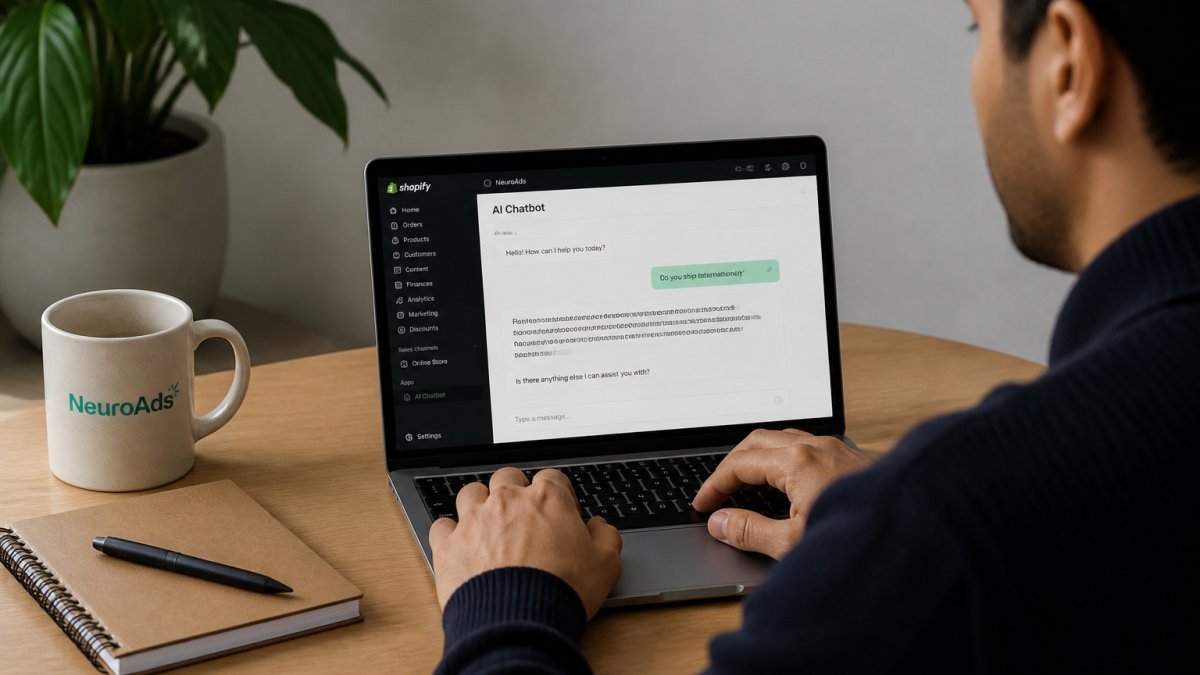
Choosing the right best AI chatbot online depends on matching tool capabilities to your specific needs. For businesses automating customer support and recovery, the Shopify AI Chatbot from NeuroAds Inc. integrates directly with your store to handle objections, capture leads, and recover abandoned carts, turning conversations into conversions.
Frequently Asked Questions
What is the best AI chatbot online for everyday questions?
ChatGPT and Google Gemini are top choices for everyday questions. ChatGPT excels at natural conversation and detailed answers across diverse topics, while Gemini integrates with Google services for seamless information retrieval. According to Pew Research Center, about half of U.S. adults now use AI chatbots, with 13% specifically using them to get news. Choose based on whether you prefer standalone access or integration with tools you already use.
Which AI chatbot is best for customer service?
ChatBot.com is purpose-built for customer service, offering AI agents, live chat, and help desk features in one platform. For businesses with 50+ employees, 91% use an AI chatbot somewhere in their customer journey. If you're a Shopify store owner, the Shopify AI Chatbot handles objection handling and abandoned cart recovery automatically, connecting customer conversations directly to your store data.
Are online AI chatbots accurate, or do they hallucinate?
AI chatbots vary in accuracy. ChatGPT and Claude provide citations and reasoning for answers, helping you verify claims. However, all large language models can generate plausible-sounding but false information (hallucinations). For research and critical information, cross-reference answers with authoritative sources. Claude is noted for stronger accuracy in technical domains like coding and writing.
Can I use a free AI chatbot online, or do I need to pay?
Free options exist. Google Gemini offers free access with some limitations, and ChatGPT has a free tier. ChatBot.com starts at $19/month for business features. Free plans typically include limited conversations, slower response times, or fewer advanced features. For customer service automation, paid platforms often provide integrations, analytics, and support that free tools don't offer.