 how-to
NeuroAds AI Optimization: A 2026 Guide
Table of Contents
- What NeuroAds AI Optimization Actually Does
- AI Ad Optimization Best Practices for DTC Brands
- E-Commerce Ad Optimization Examples That Work
- How to Improve Paid Traffic Conversion Rates
- ROAS Optimization Tools and Measurement Framework
- Common Mistakes in AI-Driven Ad Optimization
- Getting Started With NeuroAds AI Optimization
- Frequently Asked Questions
Last Updated: October 21, 2026
What NeuroAds AI Optimization Actually Does
NeuroAds AI optimization is the process of using artificial intelligence to analyze, test, and improve your advertising creative and targeting strategy to increase conversion rates and return on ad spend. At NeuroAds Inc., we focus on turning paid traffic into profitable customers by combining AI-powered ad optimization, predictive targeting, and integrated Shopify chatbot automation.
The core idea is simple: AI spots patterns in your ads that humans miss. It identifies which creative elements drive clicks, which messaging resonates with your audience, and where your targeting leaks money. Then it recommends specific changes to test.
According to AI Advertising Platform NeuroAds: 2026 Guide, this approach can improve click-through rates by up to 19% compared with ads made by human experts. But the real value goes deeper. NeuroAds AI optimization addresses three critical gaps most DTC brands face:
- Creative blind spots: You can't test 100 ad variations manually. AI can.
- Targeting waste: Broad targeting reaches the wrong people. AI narrows your audience.
- Conversion leaks: Shoppers click your ad but abandon before purchase. AI chatbots recover them.
This isn't theoretical. High-growth DTC brands use NeuroAds AI optimization to stop guessing and start measuring what actually works.
AI Ad Optimization Best Practices for DTC Brands
Most DTC brands approach ad optimization backwards. They pick a strategy, commit budget, and hope for results. The data tells a different story.
The best practices start with understanding that optimization is continuous, not one-time. Your audience changes. Competitors shift. Platforms update their algorithms. What worked last month may not work this month.
Here's what separates brands that scale profitably from those stuck at the same ROAS:
Start with a clear measurement framework. Define your KPIs before you run ads. Most brands track clicks. Strong brands track cost per acquisition, customer lifetime value, and return on ad spend. Without these numbers, you can't tell if AI recommendations actually work.
Test one variable at a time. If you change creative, audience, and bid strategy simultaneously, you won't know which change moved the needle. AI handles this automatically, but you need to validate its recommendations.
Use AI for speed, not replacement. AI tools generate ideas and flag opportunities. Your team makes the final call. The best results come from AI + human judgment, not AI alone.
Creative Testing and Performance Prediction
Creative testing is where most optimization happens. Your ad copy, images, and video are what your audience actually sees. Small changes move metrics significantly.
AI-assisted creative testing works by analyzing visual attention and engagement patterns. Tools like NeuroAds AI optimization use attention mapping to show where viewers focus on your ads. If your product sits in the corner and viewers look at the background, that's a problem. AI flags it.
Performance prediction is the next step. Instead of waiting two weeks for results, AI models predict which creative variations will perform best based on historical data. This compresses your testing cycle from weeks to days.
The catch: predictions are only as good as your data. If you've only tested one type of creative, AI has limited patterns to learn from. Feed it more data, and recommendations improve.
Attention Mapping and Visual Engagement Analysis
Attention mapping shows exactly where viewers look on your ad. It uses neuroscience-informed analysis to identify which visual elements pull focus.
Most brands assume their product image is the hero. Sometimes it isn't. Maybe your headline pulls more attention. Maybe the call-to-action button is invisible. Attention mapping reveals these gaps.
Visual engagement analysis goes further. It measures not just where people look, but how long they look and whether they engage. A viewer can look at your ad for one second and move on. Another viewer looks for five seconds and reads your copy. The second engagement is stronger.
NeuroAds AI optimization integrates both signals. It tells you which creative elements drive engagement, not just visibility. This distinction matters for conversion.
E-Commerce Ad Optimization Examples That Work
Real examples show how NeuroAds AI optimization moves metrics. These aren't theoretical gains.
A Shopify store selling fitness supplements ran ads with product-focused creative: clean shots of bottles, benefits listed in text. Click-through rate was 1.2%. Cost per click was $1.80. ROAS sat at 2.1x.
The brand switched to lifestyle creative: athletes using the product, before-and-after results, customer testimonials. Same budget. Same audience. Click-through rate jumped to 2.1%. Cost per click dropped to $1.20. ROAS hit 3.2x.
That's a 52% improvement in ROAS from creative changes alone.
Another example: a DTC skincare brand used broad targeting (women 18-65 interested in beauty). Conversion rate was 2.8%. NeuroAds AI optimization recommended narrowing to women 25-45 with high purchase intent signals. Broader reach meant fewer clicks. But conversion rate climbed to 4.1%. Same ad spend. Better customers.
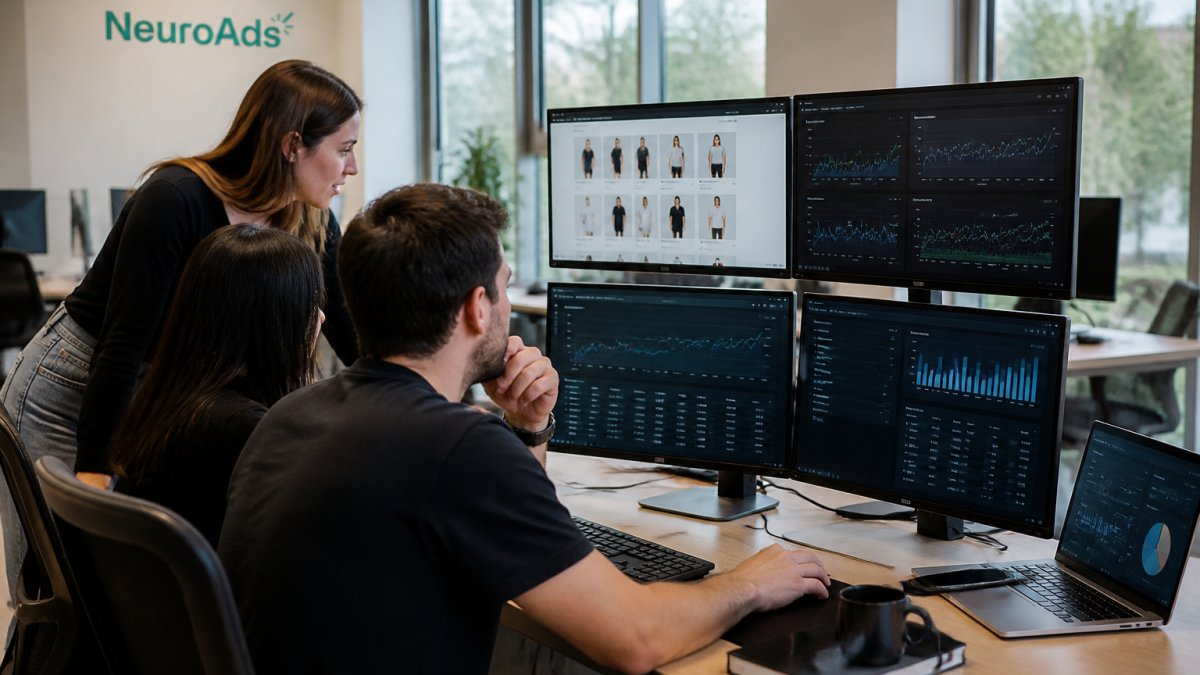
These examples share one pattern: small, data-driven changes compound. Creative optimization plus targeting refinement plus chatbot recovery adds up to meaningful ROAS improvement.
How to Improve Paid Traffic Conversion Rates
Conversion rate is where paid traffic becomes profit. A $1 click is worthless if it doesn't convert.
Most brands focus on getting cheap clicks. Smart brands focus on getting clicks from people likely to buy. That's a different problem.
Improving conversion rates requires looking beyond the ad. Your landing page matters. Your product page matters. Your checkout flow matters. And your post-click experience matters most.
Here's the sequence most high-growth brands follow:
AI Performance Marketing Platform →
- Qualify traffic at the ad level. Use targeting and messaging to attract people ready to buy, not just curious clickers.
- Remove friction on the landing page. Clear headlines, fast load times, obvious next steps.
- Use social proof. Testimonials, reviews, and user-generated content build trust.
- Capture objections before checkout. This is where the Shopify AI Chatbot helps. Shoppers have questions. A chatbot answers them instantly, 24/7.
Integrating AI Recommendations Into Your Workflow
AI recommendations are only useful if you act on them. Most teams get stuck here.
The workflow looks like this:
- AI analyzes your ads and identifies improvement opportunities
- AI generates specific recommendations (change this image, test this audience, adjust this bid)
- Your team reviews recommendations and decides what to test
- You run tests and measure results
- Results feed back into AI, improving future recommendations
This loop works best when it's automated. Manual review slows everything down. But you still need human oversight. AI sometimes recommends changes that don't make business sense.
NeuroAds AI optimization integrates into your existing workflow. It connects to your ad accounts, Shopify store, and email platform. Recommendations surface inside the platform. You approve or reject them. Results are tracked automatically.
Testing and Validation Before Full-Scale Deployment
Never deploy an AI recommendation to your full budget immediately. Test it first.
The standard approach: run the recommendation on 10-20% of your budget for one week. Measure performance. Compare to your control (the existing approach). If the recommendation wins, gradually increase budget. If it loses, stop and try something else.
This validation step separates brands that improve from brands that waste money on bad recommendations. AI is powerful, but it's not perfect. Testing protects you.
ROAS Optimization Tools and Measurement Framework
Return on ad spend is the metric that matters most. ROAS tells you how much revenue you generate per dollar spent on ads.
A 3x ROAS means you spend $1 and get $3 in revenue. A 2x ROAS means $1 generates $2. The higher the better.
But ROAS varies by channel, audience, and product. A 2.5x ROAS on Facebook might be excellent for your niche. A 2.5x ROAS on Google might be weak. Context matters.
The measurement framework needs to include:
| Metric | What It Measures | Why It Matters |
|---|---|---|
| Click-Through Rate | Percentage of people who see your ad and click | Indicates ad relevance and appeal |
| Cost Per Click | How much you pay per click | Affects overall ad spend efficiency |
| Conversion Rate | Percentage of clicks that become customers | Directly impacts ROAS |
| Cost Per Acquisition | How much you spend to acquire one customer | Determines profitability |
| Return on Ad Spend | Revenue generated per dollar spent | The ultimate metric for success |
NeuroAds AI optimization tracks all of these. It shows you which levers move which metrics. If your ROAS is stuck, AI helps you identify whether the problem is traffic quality, landing page performance, or product-market fit.
Common Mistakes in AI-Driven Ad Optimization
The biggest mistake is treating AI as a black box. You plug in data, AI spits out recommendations, you follow them blindly.
That's how you waste money. AI recommendations need context. Sometimes the "best" recommendation doesn't fit your business.
Another common mistake: expecting instant results. AI optimization compounds over time. Week one might show no change. Week four shows 15% improvement. Patience matters.
A third mistake: ignoring data quality. If your tracking is broken, AI works with garbage data. Garbage in, garbage out. Before you deploy NeuroAds AI optimization, audit your tracking. Make sure conversions are logged correctly. Make sure attribution is accurate.
Many brands also underestimate the importance of creative variety. AI can't test what doesn't exist. If all your ads look the same, AI has nothing to work with. Feed it diverse creative, and recommendations improve dramatically.
Getting Started With NeuroAds AI Optimization
Start small. Pick one campaign. Set a clear goal (increase ROAS by 15%, reduce cost per acquisition by 20%). Run NeuroAds AI optimization for two weeks. Measure results.
If it works, expand to other campaigns. If it doesn't, dig into why. Usually the issue is tracking or creative quality, not the AI.
The Shopify AI Chatbot pairs well with ad optimization. Your ads drive traffic. The chatbot captures objections and recovers shoppers before they leave. Together, they improve the full customer journey from click to purchase.
Most DTC brands are stuck because they're optimizing in isolation. They tweak ads but ignore the landing page. They improve conversion rate but don't scale traffic. They build a chatbot but don't connect it to their ad strategy.
NeuroAds Inc. solves this by connecting ad optimization, predictive targeting, and Shopify chatbot automation into one platform. You see the full picture. You test changes quickly. You measure what actually drives revenue.
The AI Advertising Platform handles the heavy lifting. It analyzes your ads, predicts performance, and recommends improvements. Your team approves tests and measures results. Over time, ROAS improves, cost per acquisition drops, and your paid traffic becomes genuinely profitable.
Get started with the AI Advertising Platform and connect your Shopify store to start optimizing today.
Frequently Asked Questions
What is NeuroAds AI optimization and how does it differ from standard ad optimization?
NeuroAds AI optimization combines artificial intelligence with neuroscience-informed analysis to improve ad performance beyond traditional methods. Instead of relying only on historical conversion data, NeuroAds analyzes visual attention, message clarity, and emotional response to predict how audiences will engage with your creative before you spend budget. This approach helps DTC brands improve click-through rates and conversion by identifying which ad elements actually capture attention and drive action.
How can I measure whether NeuroAds AI optimization is actually improving my ROAS?
Track these key metrics before and after implementation: return on ad spend (ROAS), cost per acquisition (CPA), click-through rate (CTR), and conversion rate. Set up A/B tests comparing AI-optimized creative against your baseline creative, running each for at least 7-14 days to account for platform learning. Document your starting ROAS, implement AI recommendations, and measure again. The AI Advertising Platform provides performance dashboards that connect directly to your Shopify store, so you can see revenue impact tied to each campaign adjustment.
What are the most common mistakes brands make with AI ad optimization?
The biggest mistakes are trusting AI recommendations without testing them first, ignoring audience segmentation, and expecting overnight results. Many brands also fail to validate that AI insights actually match their specific audience and product category. Another frequent error is not integrating AI recommendations into a coherent workflow, treating the tool as a one-time audit rather than an ongoing optimization system. Finally, brands often overlook the importance of connecting ad performance back to conversion data; you need to know which optimized ads actually drive profitable customers, not just clicks.
Can NeuroAds AI optimization work for smaller DTC brands, or is it only for large spenders?
AI optimization delivers value at any scale. Smaller brands often see the biggest percentage gains because they have more room to improve targeting and creative efficiency. Even at $2M annual revenue, fixing targeting gaps and improving conversion rates through data-driven creative recommendations can meaningfully increase profitable growth. The platform scales with your business, so you're not locked into a cost structure that only works at six-figure ad spend.