 blog
NeuroAds ROAS Platform: AI-Powered Ad Optimization
Table of Contents
- What Is ROAS and Why It Matters for Paid Advertising
- How the NeuroAds ROAS Platform Improves Campaign Performance
- How to Improve ROAS on Shopify With Integrated Automation
- Shopify Chatbot Automation for E-commerce Recovery
- Key Factors That Affect Advertising Return and ROAS Growth
- Real Results: NeuroAds Performance Evidence
- Getting Started With the NeuroAds Platform
- Frequently Asked Questions
Last Updated: October 20, 2026
What Is ROAS and Why It Matters for Paid Advertising
Return on ad spend (ROAS) is the revenue generated for every dollar spent on advertising.
At NeuroAds Inc., we've analyzed hundreds of e-commerce campaigns, and one pattern stands out: brands obsess over clicks and conversion rates but ignore ROAS.
ROAS connects spending to business outcomes: 2x means breaking even on ad spend, 3x gives real margin to reinvest, and below 2x most DTC brands can't sustain paid advertising long-term.
ROAS looks simple on paper but breaks down in practice.
How the NeuroAds ROAS Platform Improves Campaign Performance
The NeuroAds ROAS platform uses AI to fix the gaps between raw campaign data and actual profitability.
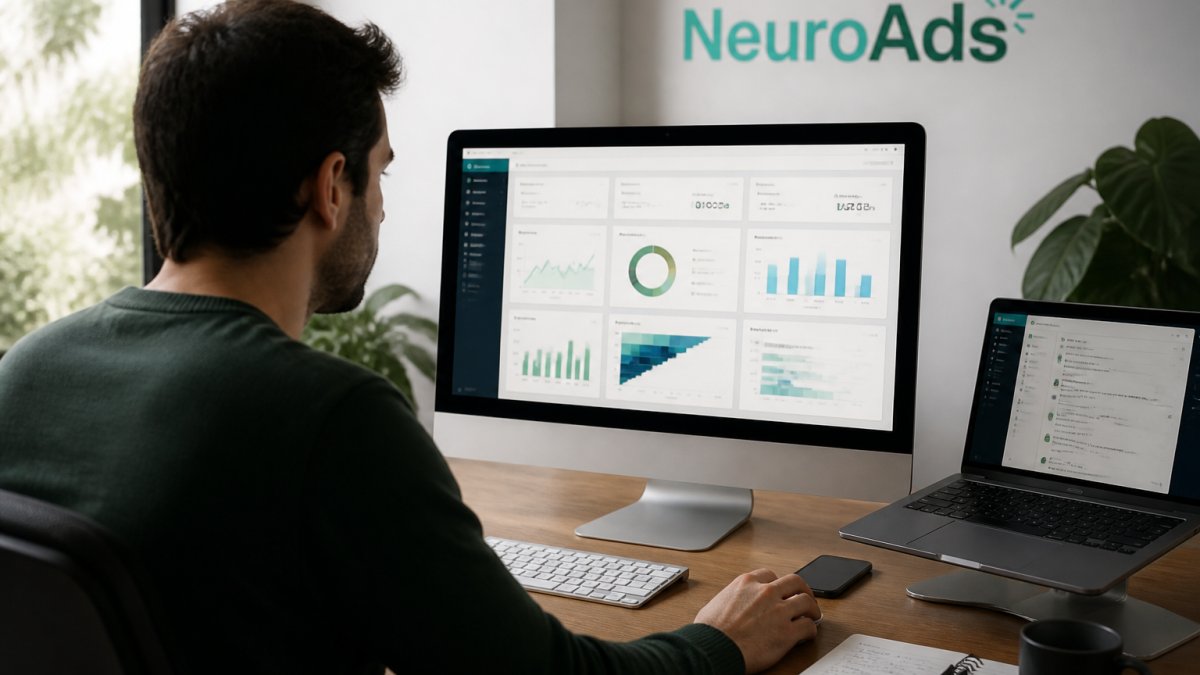
Most platforms optimize for clicks or conversions; we optimize for revenue and profit margin.
AI-Powered Audience Targeting and Predictive Optimization
Audience targeting is where most paid advertising fails: brands target too broad (wasting budget on unqualified prospects) or too narrow (missing scale). The NeuroAds ROAS platform uses predictive targeting to find the sweet spot.
Because the platform integrates Shopify customer data directly, predictions improve with every sale, learning from your best customers and surfacing patterns competitors miss.
Cross-Channel Campaign Management
Running ads across Google, Meta, and TikTok fragments your data. Each platform reports independently, so you can't see which channel actually drives profitable customers.
The NeuroAds ROAS platform consolidates all channels into one unified view, ROAS by channel, audience segment, and creative, all tied to actual Shopify revenue, so you can shift budget in real time to what's working.
Cross-channel management also enables smarter creative testing: test variations simultaneously across channels, and the AI scales winning creatives faster.
How to Improve ROAS on Shopify With Integrated Automation
Improving ROAS on Shopify requires fixing two problems: getting the right people to your store and converting them once they arrive. Most platforms handle only the first, which is why many brands plateau at 2-3x ROAS.
Budget Allocation and Bid Management
Smart budget allocation means putting more spend behind the campaigns and audiences delivering the highest ROAS. Most brands do this manually, checking weekly, too slow.
The NeuroAds ROAS platform automates budget allocation using real-time performance data. If one audience segment delivers 4x ROAS and another is stuck at 1.5x, the system automatically shifts budget toward the winner.
Creative Testing and Performance Measurement
Creative testing is where most brands leave money on the table: they test a few variations, pick a winner, and run it for months while audience fatigue erodes performance.
With the NeuroAds ROAS platform, the system tests variations continuously, headlines, images, calls-to-action, messaging angles, and measures by ROAS, not engagement, deprioritizing creatives with high click-through rates but low-value customers.
Performance measurement also accounts for attribution delays and iOS tracking limits.
Shopify Chatbot Automation for E-commerce Recovery
ROAS improves when you stop losing money on abandoned carts and objection-heavy shoppers, which is where Shopify chatbot automation becomes critical.
The NeuroAds Inc. Shopify chatbot handles common objections automatically: shipping costs, return policies, product comparisons, and payment concerns.
The chatbot also qualifies leads: complex or high-value inquiries escalate to a human, so your team focuses on conversations most likely to close.
| Strategy | Impact on ROAS | Implementation Time |
|---|---|---|
| AI audience targeting | +20-35% | 2-3 weeks |
| Cross-channel budget optimization | +15-25% | 1-2 weeks |
| Creative testing automation | +10-20% | Ongoing |
| Shopify chatbot recovery | +5-15% | 1 week |
Key Factors That Affect Advertising Return and ROAS Growth
ROAS isn't static. It changes based on market conditions, competition, audience fatigue, and your own business factors. Understanding what moves ROAS helps you defend it when it declines and grow it when conditions are right.
Audience Segmentation and Customer Data Integration
The quality of your audience data directly affects ROAS. Targeting broad audiences with generic messaging wastes budget on unqualified prospects; segmentation fixes that.
Audience segmentation means dividing your customer base into groups with similar characteristics, purchase history, or behavior.
Customer data integration makes segmentation predictive. When your ad platform connects to Shopify customer data, it identifies patterns that predict future high-value customers, and that intelligence flows back into targeting.
AI Performance Marketing Platform →
Conversion Tracking and Attribution Accuracy
ROAS calculations are only as good as your conversion tracking.
Attribution accuracy matters equally. If a customer clicks an ad, leaves, returns days later via organic search, and buys, which channel gets credit?
The NeuroAds ROAS platform connects directly to Shopify revenue, so you see actual ROAS, not platform-estimated ROAS. That eliminates tracking gaps and lets you scale with confidence.
Real Results: NeuroAds Performance Evidence
Most ROAS platforms publish headline case studies with a single impressive multiplier and no methodology, making the numbers impossible to verify. The useful question isn't "what is the biggest ROAS lift you've seen?" but "how is ROAS measured, over what window, and against what baseline?"
What Counts as Credible ROAS Evidence
A credible performance claim should answer five questions:
- What is the baseline? A lift from 1.8x to 2.4x is meaningful; a lift from 0.9x to 1.2x may still be unprofitable. Always anchor to the starting point.
- What is the attribution window? A 7-day click window and a 28-day click-plus-view window produce very different ROAS numbers on the same campaigns. Platforms that do not disclose their window are hiding the most important variable.
- Is revenue net or gross? Gross revenue ignores refunds, chargebacks, and discounts. Net revenue after returns is the number that matters for profitability.
- What is the time period? A 30-day snapshot during a seasonal peak is not comparable to a 90-day average. Ask for the date range and whether it includes promotional periods.
- What changed besides the platform? If a brand also increased budget, launched a new creative set, or changed pricing, the ROAS lift cannot be attributed to the platform alone.
A common practice is to request a controlled test: run the platform on a subset of campaigns for 30-60 days while holding budget and creative constant, then compare against a matched control group.
How NeuroAds Approaches Performance Measurement
The NeuroAds ROAS platform is designed so performance evidence is reproducible rather than anecdotal. Because it connects directly to Shopify revenue data, ROAS is calculated against actual order value, net of refunds where Shopify exposes them, rather than platform-reported conversion values, which frequently overcount or undercount depending on tracking consent, iOS privacy settings, and browser restrictions.
Three measurement principles guide how we report performance:
- Revenue-anchored ROAS. Every ROAS figure ties back to Shopify order data, so the denominator is real spend and the numerator is real revenue, not modeled conversions.
- Channel-level and segment-level breakdowns. Aggregate ROAS hides the fact that one channel may be profitable and another may be subsidizing it. The platform reports ROAS by channel, audience segment, and creative so you can see where the return actually comes from.
- Attribution transparency. The platform surfaces which attribution window is in use and lets you compare windows side by side, so you can see how much of your reported ROAS depends on late-touch credit.
What to Ask Any ROAS Platform Before You Buy
Whether you evaluate NeuroAds or another tool, the same diligence applies. Ask for:
- The attribution window used in every published benchmark.
- Whether ROAS is calculated on gross or net revenue.
- The date range and whether seasonal peaks are included.
If a vendor cannot answer those questions, the performance evidence is marketing, not measurement. The NeuroAds AI Advertising Platform is built to make those answers visible inside the product, so your scaling decisions rest on numbers you can audit rather than numbers you have to trust.
Getting Started With the NeuroAds Platform
Most ROAS onboarding pages describe a vague "connect your accounts and let AI run" flow without saying what connects, how long each step takes, or which businesses the platform fits. Here are the integrations, setup sequence, best-fit profiles, and trade-offs to expect.
Integrations and Data Connections
The NeuroAds ROAS platform is built around a Shopify-first data model. The core connections are:
- Shopify store. Order, refund, customer, and product data feed the revenue side of every ROAS calculation. This is the anchor connection; without it, ROAS reverts to platform-reported estimates.
- Ad platforms. Google Ads, Meta Ads Manager, and TikTok Ads connect via their native APIs so spend, impressions, clicks, and platform-reported conversions flow into one view.
- Analytics and tag management. A Google Analytics or tag manager connection helps reconcile sessions and conversion events against Shopify orders, which is useful for spotting tracking gaps.
A note on data quality: the platform is only as accurate as the connections behind it. Fix duplicate customer records, missing refund data, or inconsistent product tagging before or during onboarding, cleaner input produces more reliable ROAS breakdowns and better audience predictions.
Setup Sequence and Realistic Timelines
Setup follows four stages. Timelines below are typical ranges, not guarantees, and depend on how many ad accounts and how much historical data you bring.
| Stage | What Happens | Typical Duration |
|---|---|---|
| 1. Connect accounts | Shopify, ad platforms, and analytics linked; historical data imported | 1-3 business days |
| 2. Define goals | Choose optimization target (volume, profit margin, or lifetime value) and set guardrails | 1-2 business days |
| 3. Learning phase | AI analyzes audience and creative performance; initial recommendations surface | 1-2 weeks |
| 4. Optimization and scaling | Budget and bid adjustments run continuously; creative testing scales winners | Ongoing |
The learning phase is what most teams underestimate. Predictive models need enough conversion volume to separate signal from noise: a store with a few hundred monthly orders sees useful patterns faster than one with a few dozen, and smaller stores should expect a longer learning window and not judge performance in the first two weeks.
Who the Platform Fits Best
The NeuroAds ROAS platform is designed for direct-to-consumer and e-commerce brands selling on Shopify that run paid acquisition across two or more ad platforms. It fits best when:
- You spend enough on ads that manual weekly budget checks are too slow to keep up.
- You sell products with meaningful margin variation, so audience profitability differs by segment.
- You have or are building a CRM and want customer data to inform targeting.
It is a weaker fit for businesses with very low ad spend, single-channel advertisers who do not need cross-channel consolidation, or brands whose primary channel is not Shopify.
Trade-Offs to Expect
Automation is not hands-off. Plan for three trade-offs:
- Learning period. Early recommendations are less reliable; resist the urge to override the system in week one.
- Data hygiene dependency. Poor Shopify data quality degrades predictions, so budget time for cleanup.
- Goal discipline. Changing your optimization target frequently resets the learning phase and slows results. Pick a goal and hold it for at least a full learning cycle.
The NeuroAds AI Advertising Platform handles the technical optimization so your team can focus on strategy, creative, and offer. Connect your Shopify store and ad accounts, define your goal, and let revenue-anchored optimization improve your ROAS. Request Free Growth Audit
Frequently Asked Questions
What does ROAS stand for and how is it calculated?
ROAS stands for return on ad spend. It measures advertising efficiency by dividing total revenue generated from paid ads by the total amount spent on those ads. For example, if you spend $1,000 on Google ads and generate $3,000 in revenue, your ROAS is 3:1 or 3.0x. The NeuroAds ROAS platform tracks this metric across all your paid channels, Google, Meta, TikTok, in real time, so you can see which campaigns and audience segments drive the highest returns.
How can AI-powered ad optimization improve ROAS?
AI optimization works by analyzing campaign data to identify high-performing audience segments, bidding strategies, and ad creatives. The NeuroAds platform uses predictive targeting to find customers most likely to convert before you spend money on them, adjusts bids automatically based on conversion probability, and tests ad variations to find winners faster. This reduces wasted ad spend on low-intent audiences and reallocates budget toward proven performers, directly improving your return on ad spend.
What is the difference between ROAS and ROI in advertising?
ROAS measures only the revenue generated divided by ad spend, while ROI (return on investment) accounts for all costs, ad spend plus production, software, labor, and overhead. A campaign with 3.0x ROAS might have lower ROI if your production and operational costs are high. Both metrics matter: ROAS tells you if a campaign is profitable at the channel level, while ROI shows true bottom-line profitability. The NeuroAds platform helps you optimize ROAS, which directly improves overall profitability when operational costs are controlled.
How does Shopify chatbot automation help recover abandoned carts and improve conversion rates?
Shopify chatbot automation engages visitors in real time, answers objections before they leave, and captures abandoned cart information. The NeuroAds Shopify chatbot integration identifies shoppers about to exit, offers targeted assistance, and recovers carts through follow-up sequences. By handling objection handling automatically and qualifying leads before they bounce, the chatbot increases the conversion rate of your paid traffic, which directly improves ROAS because you convert more customers from the same ad spend.
Most DTC brands hit a ROAS ceiling around 2.5-3x because they're optimizing manually on incomplete data. The NeuroAds AI Advertising Platform removes that ceiling by connecting ad performance directly to Shopify revenue and automating optimization across channels. For brands running Shopify stores and managing paid advertising across multiple platforms, this is the fastest way to improve ROAS and scale profitably.