 how-to
NeuroAds Growth Platform: AI Ads + Shopify Chatbot
Table of Contents
- What the NeuroAds Growth Platform Actually Does
- The AI Advertising Platform for E-Commerce: How Targeting and Bidding Work
- Inside the Shopify AI Chatbot: Objection Handling and Lead Capture
- The Abandoned Cart Recovery Chatbot: Catching Shoppers Before They Leave
- Paid Traffic Conversion Optimization: Connecting Ad Spend to Store Revenue
- Onboarding, Integration, and What the Platform Costs
- Who the NeuroAds Growth Platform Fits (and Who It Doesn't)
- Frequently Asked Questions
Last Updated: October 18, 2026
What the NeuroAds Growth Platform Actually Does
The NeuroAds growth platform connects two things most e-commerce teams run separately: the ad that earns the click and the conversation that closes the sale. The system pairs AI ad optimization with a Shopify chatbot trained on each store's own catalog, policies, and order data.
That pairing matters because most ad tools stop at the click. They optimize toward a purchase event and call it done. But a shopper who lands, hesitates, and leaves is still a paid click you already funded.
Below, we'll show you exactly how the two halves work together, how onboarding runs, and where the platform fits.
Ad Optimization and the Shopify Chatbot in One Loop
Most stacks treat advertising and on-site support as separate line items with separate owners. The NeuroAds growth platform runs them as one feedback loop. Ad performance signals inform what the chatbot prioritizes, and chat conversations generate the objection data that shapes creative and targeting.
Here's the practical version: when a specific ad angle drives traffic that stalls on a sizing question, the chatbot surfaces that objection in real time. That signal tells the ad system which creative promise is attracting unready buyers. You fix the mismatch at the source instead of paying for it twice.
The AI Advertising Platform for E-Commerce: How Targeting and Bidding Work
An AI advertising platform for e-commerce is software that sets bids, allocates budget, and refines audience targeting automatically based on conversion data rather than manual rules.
That distinction is the whole ballgame. Ad platforms report on their own terms. A Meta campaign can look efficient while the store absorbs returns, discount codes, and low-margin SKUs.
Targeting works in layers. Predictive models rank audience segments by likelihood to convert, bidding shifts budget toward segments that convert profitably, and creative testing rotates variants based on downstream performance.
Cross-Channel Campaign Management in One View
Google, Meta, and TikTok each want to be your single source of truth. None of them can be, because each sees only its own slice of the journey. Cross-channel campaign management in the NeuroAds growth platform consolidates spend, performance, and store outcomes into one dashboard so budget decisions reflect the whole picture.
What most guides miss is that consolidation is not just reporting convenience. It changes decisions. When you can see that TikTok prospecting feeds branded search demand that Google closes, you stop cutting the channel that looks weak in isolation. You start funding the sequence.
Inside the Shopify AI Chatbot: Objection Handling and Lead Capture
The Shopify AI chatbot is an app that answers shopper questions using a store's own product, order, and policy content, then moves the conversation toward a purchase.
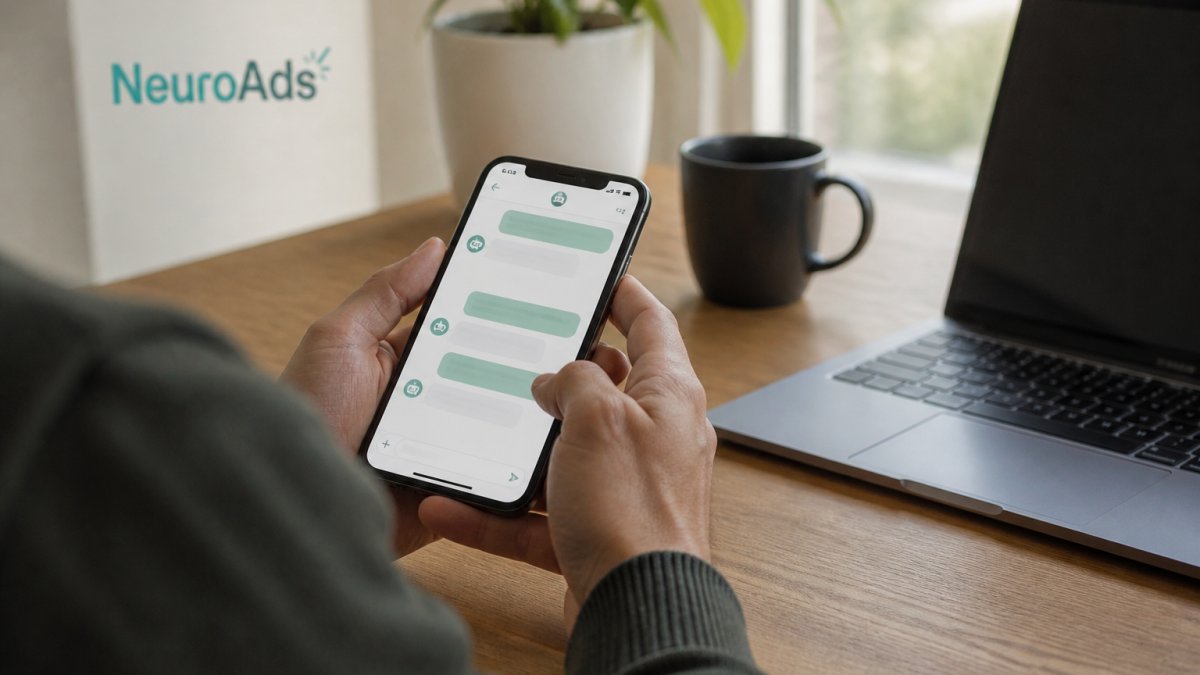
The failure mode with most chatbots is that they deflect. A shopper asks whether a jacket runs small, gets a link to a sizing chart, and leaves.
Lead capture happens when a shopper shows intent but stalls. The chatbot collects an email or phone number in exchange for answering a question or holding a cart, which turns an anonymous browser into a contact you can follow up with.
The Abandoned Cart Recovery Chatbot: Catching Shoppers Before They Leave
An abandoned cart recovery chatbot is a conversational tool that intervenes while a shopper is still on site, rather than emailing them hours after they have gone.
Timing is the entire advantage. Recovery email sequences work, but they arrive after attention has moved on. A chat prompt that appears at the moment of doubt can resolve the blocker immediately.
The chatbot also recovers contact details from shoppers who leave anyway, feeding them into follow-up flows with context attached. You know what objection stopped them, which makes the follow-up message far more useful than a generic reminder.
Paid Traffic Conversion Optimization: Connecting Ad Spend to Store Revenue
Paid traffic conversion optimization is the practice of improving the percentage of paid visitors who complete a purchase, rather than only reducing the cost of acquiring those visitors. The NeuroAds growth platform approaches it from both ends: better-qualified clicks in, fewer lost sales out.
Ad spend is only half the equation. A campaign with a strong click-through rate and a weak on-site conversion rate is a leaky bucket, and no bidding strategy fixes a leak. Connecting ad data to store revenue exposes where the leak sits, whether that is a product page, a shipping threshold, or an unanswered question.
How Revenue and Conversions Are Actually Measured
Attribution is where most ROAS claims fall apart, so it is worth being precise. The platform ties ad spend to store revenue by matching ad clicks and view-through exposures to Shopify orders within a defined attribution window.
AI Performance Marketing Platform →
Three measurement layers matter:
- Platform-reported ROAS is what Google, Meta, and TikTok each claim. It is useful for in-platform bidding but overstates contribution because each platform credits the same order.
- Blended ROAS divides total store revenue by total ad spend across all channels. It is the number to steer by because it cannot double-count.
- Incrementality compares revenue during a period of spend against a holdout or geo test. It is the only layer that answers whether the ad caused the sale, and it requires planning a test rather than reading a dashboard.
A common pattern is to reconcile all three monthly. If platform-reported ROAS is far above blended ROAS, you are likely paying for conversions that would have happened anyway, branded search and retargeting are the usual culprits.
A Practical Measurement Routine
- Set a baseline window of at least 30 days before changing anything
- Record blended ROAS across all channels, not per-platform ROAS
- Tag chatbot-assisted orders so you can isolate their contribution
- Compare new-customer ROAS separately from returning-customer ROAS
- Review weekly, but judge changes on a rolling 30-day view
- Run one geo or holdout test per quarter to sanity-check incrementality
Reporting Cadence and Attribution Limits
Daily dashboards are for spotting breakage, not for judging performance. Weekly reviews should cover spend pacing, blended ROAS, and chatbot-assisted conversion rate. Monthly reviews should cover new-customer acquisition cost, channel contribution, and any incrementality test results.
Be honest about the limits. Cross-device journeys, iOS privacy changes, and cookie restrictions mean no attribution model sees every touch. Treat attribution as a directional signal and incrementality testing as the tiebreaker. The trap is celebrating a platform ROAS lift that came from shifting budget toward retargeting existing customers, blended numbers catch that, platform dashboards usually hide it.
Onboarding, Integration, and What the Platform Costs
Most reviews of e-commerce ad tools stop at the feature list. This section walks through what implementation actually involves, in the order it happens, so you can judge whether your team can run it without a dedicated engineer.
Step 1: Connect Shopify and Set Data Permissions
Start in the Shopify admin. The platform installs as an app and requests read access to products, orders, customers, and store policies. Grant the minimum scopes needed: catalog and order read access for revenue attribution, policy content for chatbot training, and customer email or phone only if you plan to run follow-up flows.
A common pattern is to run the connection in a staging or duplicate theme first, confirm that order and revenue events land in the dashboard, then promote to the live theme. This catches scope mismatches before they touch real traffic.
Step 2: Connect Ad Accounts
Connect Google Ads, Meta Ads Manager, and TikTok Ads Manager in that order if you spend across all three. Each connection uses OAuth, so you authorize the platform to read spend and campaign structure without sharing your login credentials. Confirm that the correct ad account and pixel or conversions API source are selected, a mismatched pixel is the single most common cause of spend that never maps to store revenue.
Expect a short backfill window while historical spend syncs. Do not change bids or budgets during the backfill; you will be comparing new decisions against incomplete data.
Step 3: Train the Chatbot Last
Configure the chatbot only after catalog, order, and policy content are indexed. Training pulls from product descriptions, sizing charts, shipping terms, return windows, and FAQ pages. Review the generated answers for your top 20 products before launch, that is where most pre-purchase hesitation concentrates.
Troubleshooting the First Two Weeks
- Spend shows but revenue does not. Check that the Shopify app has order read scope and that the pixel fires on the thank-you page.
- Chatbot answers are generic. Confirm policy pages are published, not draft, and that product metafields are populated.
- Attribution looks inflated. Exclude internal and test orders, and confirm you are not double-counting the same conversion across two ad accounts.
What the Platform Costs
Pricing is scoped to store size, monthly ad volume, and which modules you run, so there is no single published rate. Ask for a written quote that separates the ad platform fee from the chatbot fee, states whether ad spend is billed by the platform or paid directly to Google, Meta, and TikTok, and confirms the contract term and cancellation window. Compare that quote against your current blended customer acquisition cost, if the platform fee exceeds the margin it recovers, the math does not work regardless of features.
Who the NeuroAds Growth Platform Fits (and Who It Doesn't)
The NeuroAds growth platform fits Shopify-based DTC brands running meaningful paid spend across more than one channel, where conversion losses on site are costing real money.
It fits less well in two cases. Brands with almost no paid traffic get limited value from ad optimization, since there is little spend to optimize.
Be honest about your bottleneck. If your store converts well and your problem is reach, you need media buying, not recovery automation.
Most DTC brands do not have an advertising problem or a conversion problem.
Frequently Asked Questions
What is the NeuroAds growth platform?
It is an AI-powered growth platform built for DTC and e-commerce brands. It combines predictive ad targeting, cross-channel campaign management, and an integrated Shopify chatbot that handles shopper questions and objections. The idea is a single loop: ad signals feed the chatbot, and chatbot conversations feed conversion data back into ad optimization. That connection is what separates it from a standalone ad tool or a standalone chat widget. Pricing is not published, so check the NeuroAds Inc. site for current plans.
Can a Shopify AI chatbot really recover abandoned shoppers?
A chatbot helps at the moment a shopper hesitates. The NeuroAds Shopify AI chatbot is trained on your store's product, order, and policy content, so it can answer shipping questions, check order status, and add items to cart from inside the chat. That removes the friction that sends people to a competitor's site. It does not replace email or SMS recovery sequences; it works alongside them by catching the shopper while they are still on the page.
How do you measure whether an advertising platform is improving ROAS?
Start with a clean baseline: pull 60 to 90 days of spend and revenue by channel before you change anything. Then track blended ROAS alongside channel-level ROAS, because a chatbot that recovers carts will lift store revenue even when ad spend stays flat. Watch conversion rate and average order value too. If ROAS rises but conversion rate falls, the lift is coming from budget cuts, not better targeting. Give any change at least two full attribution windows before you judge it.
Does the NeuroAds growth platform make sense for a smaller DTC brand?
The fit depends on whether you already spend enough on paid traffic to generate meaningful optimization signal. Brands running a few thousand dollars a month across Google, Meta, and TikTok often get more from fixing conversion first, which is where the Shopify chatbot comes in. Larger spenders get more from the predictive targeting and cross-channel bidding side.