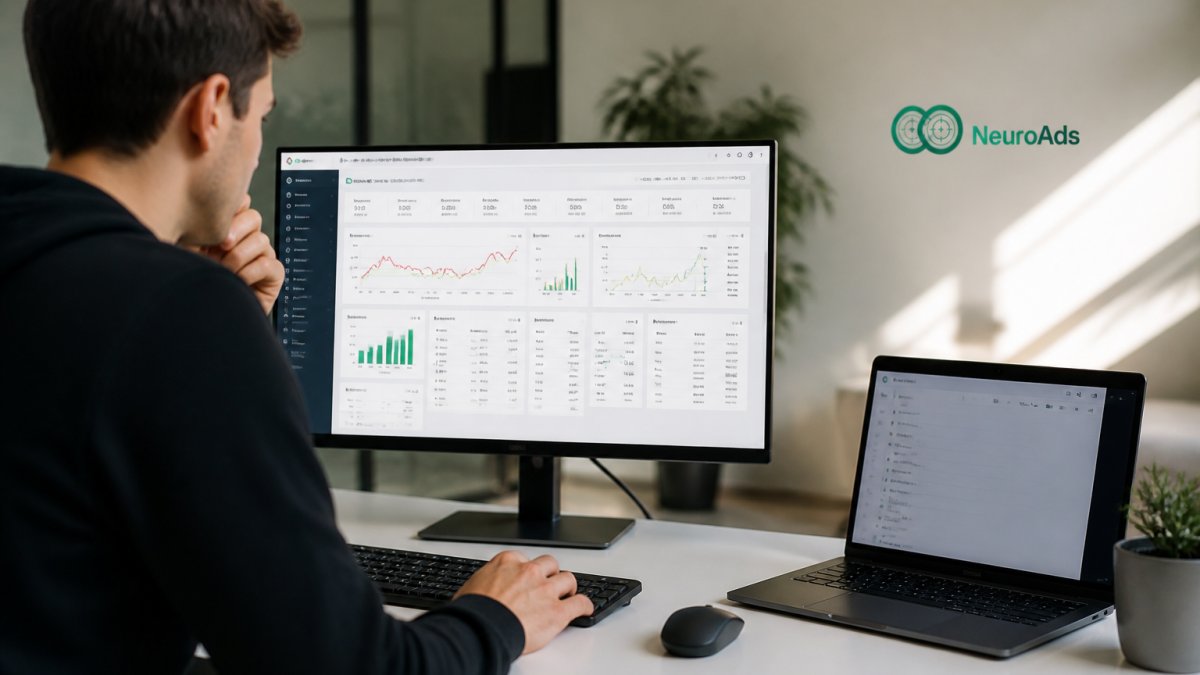
 comparison
Predictive Targeting vs Manual Ad Bidding for DTC Brands
Last Updated: October 28, 2026
Quick Summary
Predictive targeting uses historical and real-time signals to estimate which users are most likely to convert, then directs ad spend toward them. Manual ad bidding lets advertisers set bids, keywords and placements directly. Manual bidding suits small, tightly managed accounts, while predictive approaches work best when the account has enough conversion data.
- Manual bidding gives direct, line-by-line control over spend allocation by keyword or placement.
- Automated bidding depends on sufficient conversion data, a clear objective and sound campaign structure.
- Google's guidance suggests at least 15 conversions in the past 30 days for Target CPA and Target ROAS.
- A hybrid setup, with manual control over proven segments and automation for the rest, is often the strongest option.
- Judge an automated strategy only after its learning period, and avoid large budget changes while it learns.
Table of Contents
- Predictive Targeting and Manual Bidding Defined
- How Manual Bidding Gives You Direct Control
- How Predictive Targeting and Automated Bidding Work
- Side-by-Side Comparison: Control, Data, and Cost
- Reducing Customer Acquisition Costs With the Right Approach
- How to Decide Which Approach Fits Your Campaigns
- Booking a Walkthrough of Your Current Bidding Setup
- Frequently Asked Questions
Predictive Targeting and Manual Bidding Defined
Predictive targeting is an approach that uses historical and real-time signals to estimate which users are most likely to convert, then directs ad spend toward them. Manual ad bidding is the opposite: the advertiser sets bids, keywords, placements and audience choices directly. The right answer depends on how much control your team needs and how much data your account has.
Manual bidding gives you direct, line-by-line control. Predictive and automated approaches hand more of that decision to the platform. Neither is universally better. The trade-off is between control and the speed at which a system can react to signals you cannot see yourself. For a concrete side-by-side look at platforms that combine both approaches, see Cometly vs Madgicx for ecommerce.
How Manual Bidding Gives You Direct Control
Manual bidding lets an advertiser decide exactly what to pay for each click or placement. Google's guidance on bidding strategies notes that the right choice depends on campaign goals and the networks you target, so manual control suits teams that want to set that logic themselves. Google Ads Help guidance on choosing a bidding strategy
Manual bidding works well when a campaign is small or tightly managed. American Eagle describes manual bidding as the stronger option for advertisers who need precise control over ad spend. American Eagle's comparison of manual and Smart Bidding in Google Ads
Pros of manual bidding
- Full control over spend allocation by keyword or placement
- Easier to explain and audit line by line
- Predictable when you already know which segments are profitable
Cons of manual bidding
- Slow to react to shifts in auction conditions
- Demands constant attention from a media manager
- Hard to scale across many campaigns without losing efficiency
Best for: teams with a small number of campaigns and clear, proven audience data. Skip if: you run many campaigns across several platforms and cannot monitor bids daily.
How Predictive Targeting and Automated Bidding Work
Automated and predictive bidding replace manual bid decisions with models that score each auction using many signals at once. Digital Marketing Institute notes that automated bidding depends on sufficient conversion data, a clear objective and sound campaign structure. Digital Marketing Institute guidance on Smart Bidding strategies Those conditions matter because the model learns from the data you feed it. Weak or sparse conversion tracking leads to weak predictions.
Predictive targeting in particular is presented as a data-driven replacement for manual media buying, shifting execution toward models that estimate intent rather than relying on hand-picked audiences. AI Digital overview of programmatic and predictive targeting
Automated bidding can lift results when the setup is right. One study of a major e-commerce advertising platform reported 2-6% improvements in sales, units sold and click volume from an optimized bidding strategy. OPTIMUS paper on offline bidding for manual targeting campaigns Those are gains reported under specific test conditions, not a promise for every account.
The Learning Phase Reality
Every automated strategy needs time to gather data before its performance settles. During this learning period, cost per acquisition often looks unstable. Teams that judge the strategy in its first week usually reverse a decision that needed another few weeks. Plan for the learning period before you switch, and avoid large budget or target changes while the model is still learning.
Side-by-Side Comparison: Control, Data, and Cost
| Factor | Manual Bidding | Predictive / Automated Bidding |
|---|---|---|
| Control over bids | Direct, line by line | Set by goals and constraints |
| Data requirement | Low | High conversion volume needed |
| Speed of adjustment | Slow, depends on manager | Fast, real-time per auction |
| Staffing demand | High | Lower day to day |
| Best for | Small, tightly managed accounts | Scaled accounts with clean tracking |
Costs depend on your account size, tools and staffing, so compare the total cost of management time against the efficiency gain, not just the media spend. For current software pricing, check each platform's website or request a quote directly.
AI Performance Marketing Platform →
Reducing Customer Acquisition Costs With the Right Approach
The goal for most DTC brands is a lower cost to acquire each customer. Many teams find that a hybrid setup gives the best results: manual control over a few proven segments, with automation handling bids for the rest. This hybrid approach is often overlooked in simple comparisons, yet it lets you protect budget on known winners while letting the model explore.
Acquisition costs also rise when ad creative wears out. Refreshing creative regularly keeps predictive models supplied with fresh signals, which supports the efficiency gains automation promises. Our guide on reducing ad creative fatigue covers seven practical strategies, and how to reduce ad spend waste in ecommerce walks through the steps to cut wasted spend.
How to Decide Which Approach Fits Your Campaigns
Start with your data, then map your goal to a specific bid strategy rather than a vague "automated vs. manual" choice. The framework below is built around the named strategies you will see inside Google Ads and Microsoft Advertising.

Step 1: Match the strategy to the goal
- Maximize Clicks, use only when the goal is traffic and conversion tracking is not yet reliable. It ignores conversion value entirely, so it is a poor fit once you have sales data.
- Maximize Conversions, a reasonable starting point for accounts with steady conversion volume but no clear value differences between conversions.
- Target CPA (tCPA), use when every conversion is worth roughly the same and you have a defensible cost-per-acquisition ceiling. Set the target near your recent 30-day average, not at a stretch goal.
- Target ROAS (tROAS), use when conversion values vary widely (for example, a $40 accessory and a $400 bundle in the same campaign). It needs value tracking, not just conversion counting.
- Manual CPC / Enhanced CPC, keep for low-volume campaigns, new accounts without conversion history, and high-value segments where a single conversion justifies hand management.
A common pattern is to run Maximize Conversions for two to four weeks to establish a baseline, then graduate to tCPA or tROAS once the account has enough conversion volume for the model to stabilize.
Step 2: Check the data threshold
Automated strategies need conversion volume to learn. Google's own guidance recommends a minimum of 15 conversions in the past 30 days for Target CPA and Target ROAS, and roughly 30 or more for the models to perform reliably. Below that threshold, manual bidding or Maximize Clicks gives you more predictable decisions until volume grows. This is the single most common reason a switch to smart bidding underperforms: the account simply did not have the data.
Step 3: Choose a hybrid setup, not a binary
The strongest accounts rarely run pure manual or pure automated. Layer them:
- Portfolio bid strategies, group campaigns with similar economics under one tCPA or tROAS target so the model allocates budget across them.
- Manual bid adjustments on top of automation, device, location, audience, and ad-schedule adjustments still apply when a smart bidding strategy is active. Use them to protect high-value segments rather than to override the model.
- Manual campaigns for proven winners, keep brand terms and your highest-margin segments on manual or a separate tCPA so automation cannot dilute them.
- Automated campaigns for exploration, let Maximize Conversions or tROAS run on broad and prospecting campaigns where the model has room to find new converters.
Step 4: Review on a fixed cadence
Change one variable at a time and give each change a full learning window before judging it. Review weekly, but only act on trends that span at least two weeks. If a strategy misses its target for three consecutive weeks after the learning phase, adjust the target in small increments (roughly 10-20%) rather than switching strategies outright.
Use these questions to pressure-test your choice:
- Do you have at least 15 conversions in the last 30 days, and clean value tracking if you plan to use tROAS?
- Is every conversion worth roughly the same, or do values vary enough to need tROAS?
- Can someone monitor bids and adjust daily, or does the account need to run with less hands-on management?
- Do you need to explain each spend decision to leadership, or is a goal-based target enough?
Booking a Walkthrough of Your Current Bidding Setup
If you want to see how these trade-offs apply to your own account, NeuroAds Inc. offers an AI advertising platform built for DTC brands that want predictive targeting and cross-channel optimization in one place. For shoppers who abandon the store before buying, the Shopify AI Chatbot handles objections and recovery directly on your site.
Frequently Asked Questions
When should you switch from manual bidding to predictive targeting?
Consider the switch once your campaigns generate enough conversion data for an automated system to learn from, and when manual adjustments are no longer keeping pace with auction changes. Manual control still makes sense while you are testing new audiences or running small, tightly managed budgets. Review your conversion volume, return on ad spend trend, and the time your team spends on bid adjustments before deciding. Change one campaign at a time so you can measure the effect clearly.
Does predictive targeting reduce ad spend waste for e-commerce?
The effect depends on conversion tracking quality, product margins, and how much data your account holds. Check your cost per acquisition and wasted spend over at least several weeks before drawing conclusions. Results vary by account, so measure against your own baseline.
What are the primary risks of relying solely on manual ad bidding?
The main risk is slower reaction to auction changes. Manual bidding cannot process the many signals that change from one auction to the next, such as device, location, time of day, and user intent. Teams that rely only on manual bids often spend more hours on adjustments and still leave conversions unclaimed in competitive periods. Manual control remains valuable for precise budget limits and smaller campaigns. The risk grows as account size and the number of audiences increase.
What is the difference between target CPA and target ROAS in automated bidding?
Target CPA asks the system to aim for a set average cost per conversion, while target ROAS asks it to aim for a set return on ad spend based on conversion value. Use target CPA when every conversion carries a similar value, such as lead generation. Use target ROAS when order values vary, as they often do across an e-commerce catalog. Both depend on accurate conversion tracking and enough recent conversions to train on. Set targets close to your recent performance first, then adjust gradually.