 How-to
How to Handle Customer Objections Without Losing the Sale
Last Updated: November 11, 2026
Quick Summary
Handle customer objections with a five-step process: pause and let the buyer finish, acknowledge the concern and ask one clarifying question, respond with evidence and reframe, confirm the answer landed, then propose one clear next step. Treat pushback as a buying signal, since only 2% of sales close on first contact.
- Pause roughly five times longer than usual before responding so the prospect feels heard.
- Ask narrow clarifying questions that force a choice, not open-ended ones that invite vague answers.
- Reps who handle three or more objections in a single call convert at 67%, versus 23% for those who do not.
- Tie price pushback to a measurable outcome instead of discounting to hold margin.
- AI chatbots resolve up to 80% of routine customer objections, but hand off emotional or high-value ones to a human.
Table of Contents
- Why Most Customer Objections Are Buying Signals in Disguise
- The 5-Step Process for How to Handle Customer Objections
- Common Sales Objections and Responses That Actually Convert
- How to Overcome Price Objections Without Discounting
- Objection Handling Scripts for Ecommerce Teams
- When an AI Chatbot for Customer Service Should Take the Objection
- Separating a Real Blocker From a Surface Objection
- Put Your Shopify Chatbot to Work on Objections
- Frequently Asked Questions
Why Most Customer Objections Are Buying Signals in Disguise
Only 2% of sales close on first contact, according to CareerTrainer.ai's objection handling statistics report. That single number reframes everything about how to handle customer objections. Pushback is not rejection.
At NeuroAds Inc., we see the same pattern in chat logs every week. The shopper who asks "is this really worth it?" is closer to buying than the one who says nothing and leaves.
Here is what most guides get wrong: they treat objections as obstacles to defeat. In practice, an objection is a request for permission.
Below, we break down a five-step process, the scripts that work, and when to let an AI chatbot take the conversation.
The 5-Step Process for How to Handle Customer Objections
Handling customer objections is a repeatable process, not a talent. The steps below work in a sales call, a live chat, or an email thread. The order matters: skip a step and you end up defending instead of diagnosing.

Step 1: Pause and Let the Buyer Finish
Stop talking. Let the sentence land. SalesHive's 2026 guidance recommends pausing roughly five times longer than usual before responding, so the prospect feels heard and you get time to think (SalesHive's objection handling techniques(https://saleshive.com/blog/sales-objection-handling-techniques-close)).
Interrupting to defend is the fastest way to lose trust. In live chat the pause is literal: wait for the full message, including the second line the buyer types after the first.
Watch out: A pause that stretches too long in chat reads as an abandoned conversation. If you need more than a few seconds, send a short holding line ("Good question, let me check that") so the buyer knows you are still there.
Step 2: Acknowledge and Ask a Clarifying Question
Acknowledge the concern, then ask one question. "That's fair. Is it the upfront cost, or whether it pays back?" This separates a surface remark from the real blocker.
Good clarifying questions are narrow, not open-ended. "What's making you hesitate?" invites a vague answer. "Is the concern the setup time or the monthly commitment?" forces a choice and tells you which objection you are actually handling. Ask one question at a time; stacking three questions lets the buyer answer only the easiest one.
Step 3: Respond With Evidence and Reframe
Answer with proof: a case study, a number, a guarantee. Then reframe. "It costs more today, but it replaces two tools you already pay for."
Evidence beats assertion. A named customer story, a specific result, or a written guarantee all carry more weight than a claim about quality. The reframe should change the comparison, not repeat the price. If the buyer is comparing you to a cheaper option, compare against the cost of the problem instead.
Watch out: Reframing before you have acknowledged the concern reads as a pivot and sounds like a script. Acknowledge first, then reframe.
Step 4: Confirm the Answer Landed
Check that the answer landed: "Does that address it?" Then stop and listen. A quick "yes" with a change of subject means move on. A hesitation, a repeat of the same concern, or a new objection means the real blocker is still buried.
Confirming turns a monologue into a conversation and gives the buyer permission to raise the concern they have not said out loud yet.
Step 5: Propose a Clear Next Step
Close the loop with one specific next action: book the call, send the summary, start the trial, or move to checkout. Vague endings ("let me know") let the conversation die. A clear next step also surfaces a hidden objection, because a buyer who will not commit to a small step is telling you something.
If the objection returns after Step 4, do not repeat the same answer louder. Go back to Step 2 and ask a different clarifying question. The same objection twice means your first diagnosis was wrong.
For a deeper walkthrough of applying this with automation, see our guide on the AI chatbot for objection handling.
Common Sales Objections and Responses That Actually Convert
The most common sales objections and responses follow predictable patterns. Prepare for these five and you cover most conversations. Each row below pairs the objection with what the buyer usually means and a response you can adapt, not recite.
| Objection | What the buyer means | Response that works |
|---|---|---|
| "It's too expensive" | "I don't see the return" | Tie cost to a measurable outcome |
| "I need to think about it" | "I have an unanswered question" | Ask what is still unclear |
| "We already use something" | "Prove you're different" | Name one specific difference |
| "The timing is bad" | "I don't see urgency" | Show the cost of waiting |
| "I need to ask my boss" | "I need ammunition" | Offer a summary they can share |
Notice the pattern. Every response starts with diagnosis, not defense.
Price and Budget Objections
Price pushback is rarely about the number. It is about whether the buyer can see the return. The response that works ties cost to a measurable outcome the buyer already cares about, then lets them do the math. "Most customers in your situation recover the cost within the first month" is stronger than "it's worth it." If the buyer genuinely cannot afford it, say so and offer a smaller starting point rather than a discount.
Timing and Urgency Objections
"The timing is bad" usually means the buyer sees no cost to waiting. Show the cost of waiting in concrete terms: the carts abandoned this week, the hours spent on the manual workaround, the season that starts in six weeks. If there is no real cost to waiting, the honest answer is to agree on a follow-up date and stop pushing.
Need and Fit Objections
"We already use something" or "this isn't for us" is a request for a specific difference. Name one difference, not five. A single concrete contrast ("we handle returns inside the same chat, so your team does not switch tools") is easier to evaluate than a feature list. If the fit is genuinely poor, say so; a bad-fit sale costs more in support than it earns.
Authority and Decision-Making Objections
"I need to ask my boss" means the buyer needs ammunition, not another call. Offer a one-page summary with the numbers, the comparison, and the next step, written so they can forward it without editing. Ask who else will weigh in and what that person cares about, then address that concern in the summary.
Repeated Objections
When the same objection comes back after a clear answer, the first answer missed the real concern. Do not repeat it louder. Ask a different clarifying question and listen for the concern underneath. A buyer who raises a new objection each time is engaged; a buyer who repeats one is stuck, and stuck buyers need a different conversation, not a better script.
How to Overcome Price Objections Without Discounting
The better move is to change the comparison.
Three tactics that hold margin:
- Break the price into daily cost. "$90 a month is $3 a day."
- Anchor against the cost of the problem. What does a lost cart cost weekly?
- Bundle value, not price. Add onboarding or support instead of cutting the number.
If price pushback happens at checkout, the fix is often timing, not discounting. Our breakdown of Shopify chatbot automation for cart recovery covers how to recover carts without slashing prices.
Objection Handling Scripts for Ecommerce Teams
Objection handling scripts for ecommerce need to sound like a helpful person, not a call center. Short beats clever.
Here is a script skeleton your team can fill in:
"Totally fair concern about [objection]. A lot of our customers asked the same thing. What usually matters is [underlying issue]. Here's what we see: [proof point]. Would it help if I [next step]?"
Three rules for writing your own:
- Lead with acknowledgment, never with "but."
- Keep responses under 40 words in chat.
- End every script with a question, not a statement.
Want to make those scripts convert inside chat? Read how to improve Shopify chatbot conversions.
When an AI Chatbot for Customer Service Should Take the Objection
An AI chatbot for customer service should take routine objections, and hand off anything emotional or high-value. That split is the whole game.
AI-powered chatbots resolve up to 80% of routine customer objections (CareerTrainer.ai's statistics report(https://careertrainer.ai/en/reports/objection-handling-statistics/)). Routine means predictable: shipping times, sizing, return policy, price comparisons.
Hand off to a human when:
- The buyer is frustrated or hostile
- The order value is high
- The objection involves a custom request
The rest can run 24/7. Our AI chat page on turning conversations into checkouts shows how this works on Shopify.
Separating a Real Blocker From a Surface Objection
A surface objection is the first thing a buyer says. A real blocker is the reason they will not buy. Telling them apart saves wasted effort.
Run this check:
- Repeat it back. If they correct you, you found the real one.
- Ask "what would need to be true?" Their answer names the blocker.
- Watch for repetition. The same objection twice means your first answer missed.
A buyer who raises a new concern each time is engaged. A buyer who repeats one concern is stuck. Treat those differently.
Put Your Shopify Chatbot to Work on Objections
Objections often arrive outside business hours, on mobile, in the cart, when no rep is online. That is where automation earns its place.
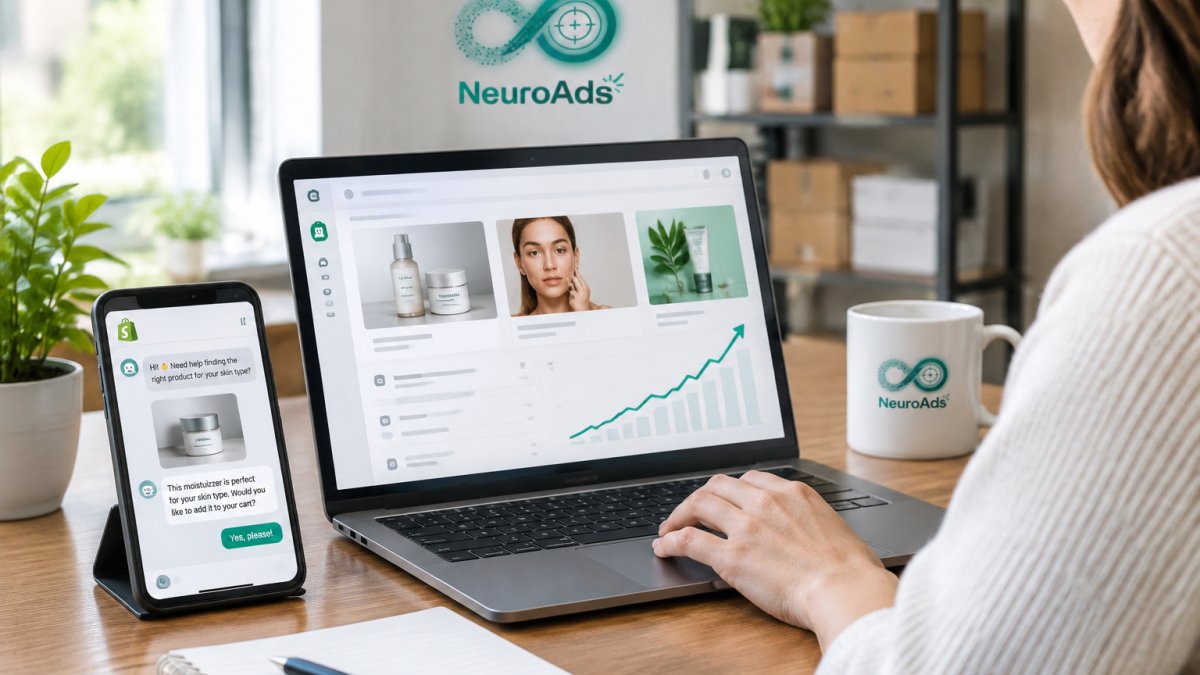
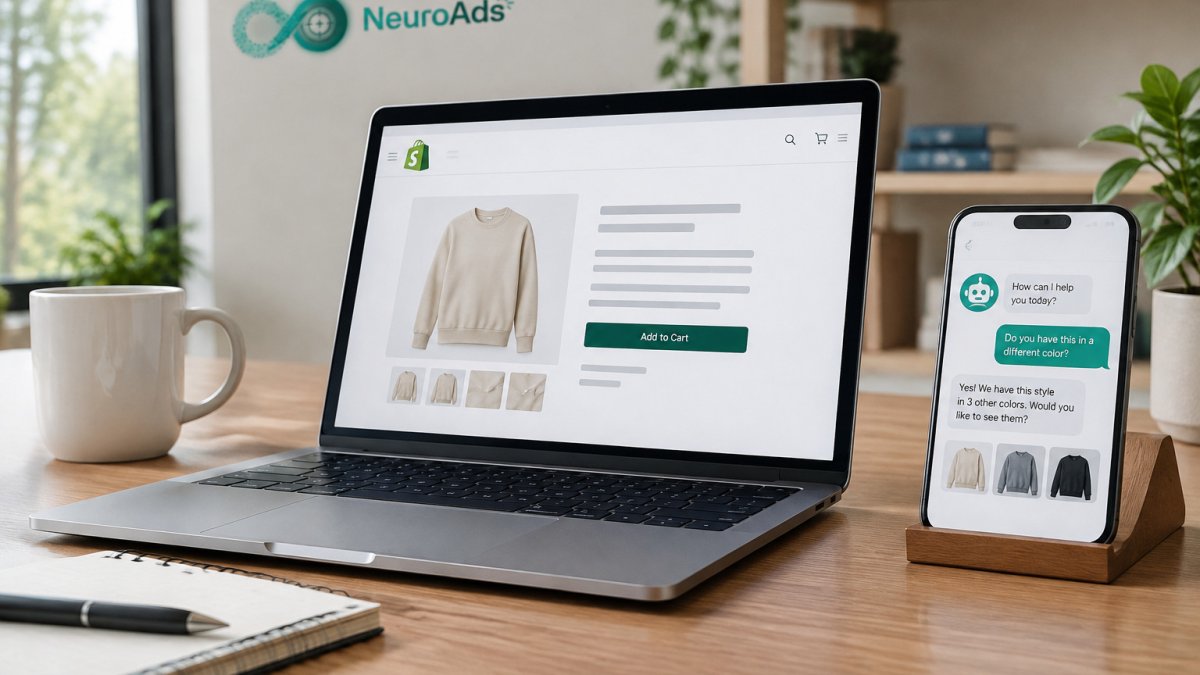
NeuroAds Inc. builds the Shopify AI Chatbot to answer objections in the moment and recommend products. It works alongside our AI advertising platform, which uses performance signals to improve targeting. If you want the full picture first, start with what an AI chatbot platform is and how to choose one.
The challenge is not knowing the steps. It is answering every objection fast enough, on every channel, without burning out your team.
Frequently Asked Questions
What are the 5 steps of objection handling?
The five steps are: pause and let the buyer finish, acknowledge the concern, ask a clarifying question to find the real issue, respond with evidence or a reframe, and confirm the next step. Pausing matters more than most reps think. Pausing before responding lets the prospect feel heard. Plan for several rounds of this process across the sales cycle.
What are the most common ecommerce sales objections?
Ecommerce buyers most often raise price, shipping cost and speed, return policy, product fit or sizing, trust in an unfamiliar store, and timing. Many of these arrive before checkout, which is why objection handling scripts for ecommerce should cover cart and product pages, not just live chat. Routine objections like shipping and returns can be handled automatically while your team takes the complex cases.
How can AI automation help resolve customer objections?
An AI chatbot for customer service answers routine objections instantly, at any hour, using your store's actual policies and product data. That covers shipping times, return windows, sizing and stock questions without a queue. AI chatbots can handle routine objections, which frees human reps to focus on the harder conversion barriers.
How do I know if an objection is real or just a smokescreen?
Ask a clarifying question and watch whether the answer gets specific. A real blocker comes with detail: a budget cycle, a decision-maker, a contract date. A surface objection stays vague or shifts to a new complaint when you address the first one. Repeated or emotional objections usually signal an unmet need underneath, not the stated issue. Track which objections recur in your follow-up notes so you can tell a pattern from a one-off.