 listicle
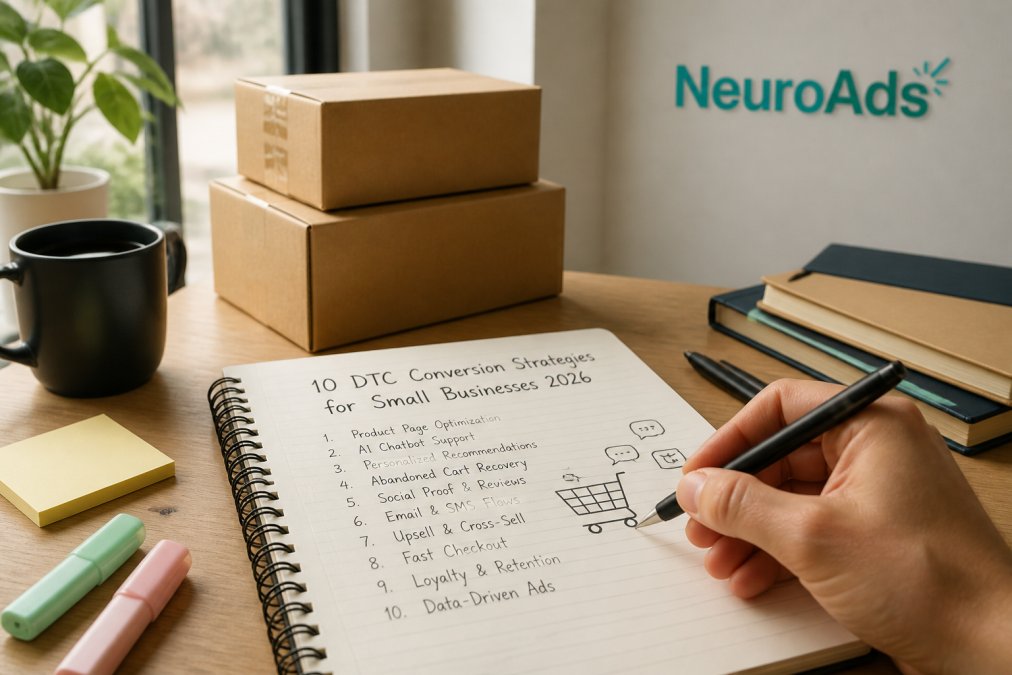
10 DTC Conversion Strategies for Small Businesses 2026
Table of Contents
- Why Small DTC Brands Need a Conversion-First Ecommerce Growth Strategy
- 1. Build a Budget-Conscious Conversion Rate Optimization Tools Stack
- 2. Deploy Shopify Chatbot Automation for Real-Time Objection Handling
- 3. Apply Customer Objection Handling Techniques at Checkout
- 4. Turn Email and SMS Into Post-Purchase Retention Engines
- 5. Amplify User-Generated Content and Social Proof
- 6. Fix Attribution Modeling and Tracking Before You Scale Spend
- 7. Run Multi-Channel Campaigns With AI-Driven Personalization
- Frequently Asked Questions
Last Updated: September 24, 2026
Why Small DTC Brands Need a Conversion-First Ecommerce Growth Strategy
DTC brands with advanced conversion rate optimization strategies now achieve average conversion rates of 8-12%, while most competitors struggle to break 3%, according to Attn Agency's 2026 CRO analysis. That gap is the entire ballgame. Median revenue growth for DTC brands has slowed to roughly 3% (Yotpo's 2026 DTC Brand Comparison), which means growth now comes from converting better, not just spending more. DTC conversion strategies are the set of tactics that turn existing traffic into revenue: fixing your tools, automating objection handling, and tracking what actually drives sales. The ten strategies below cover the whole funnel, from first click to repeat purchase.
1. Build a Budget-Conscious Conversion Rate Optimization Tools Stack
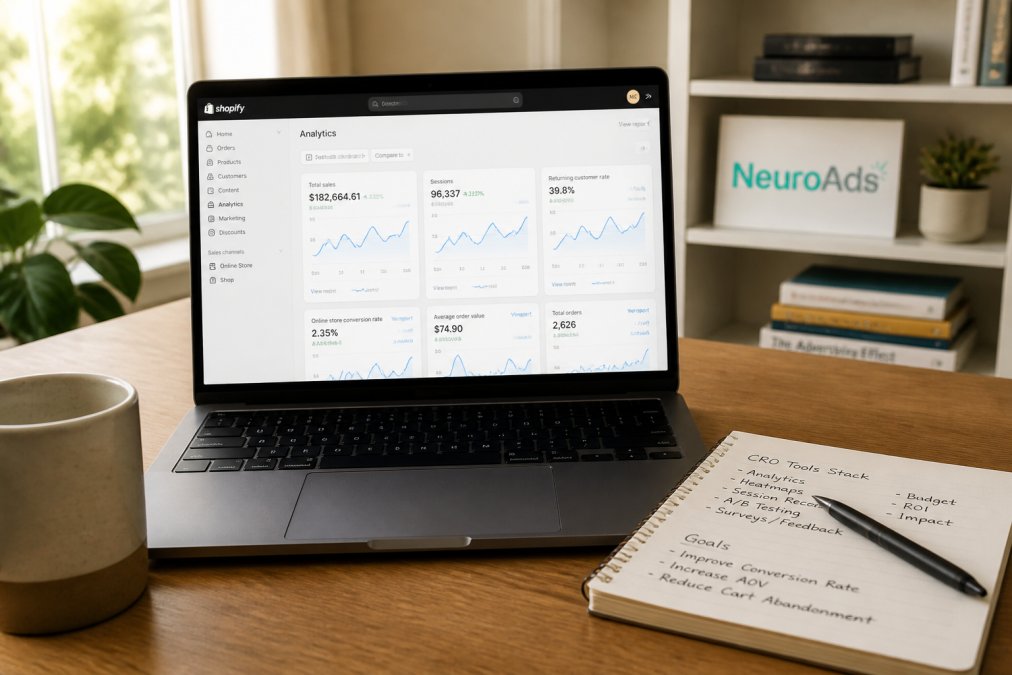
The best conversion rate optimization tools for small DTC brands are the ones that pay for themselves within a month. You do not need an enterprise stack. You need three or four tools that fix specific leaks.
A practical starter stack looks like this:
- Behavior analytics: Hotjar (free tier available) shows where visitors click, scroll, and drop off.
- On-site messaging: OptiMonk ($29/month) catches exit intent and reduces cart abandonment.
- Email and SMS: Klaviyo ($20/month) automates post-purchase flows and segmentation.
- Ad optimization: An AI platform that ties spend to actual conversions.
Small businesses adopting AI tools and no-code platforms in 2026 report cost reductions of 70-95% versus traditional development (Lovable's 2026 small business trends guide). Start with the free tiers, prove the lift, then upgrade.
2. Deploy Shopify Chatbot Automation for Real-Time Objection Handling
Shopify chatbot automation resolves buyer hesitation the moment it appears, before the shopper abandons the cart. Most store owners lose sales to unanswered questions: sizing, shipping times, return policy. A chatbot answers in seconds.
NeuroAds Inc. builds this directly into its platform through an integrated Shopify chatbot that handles lead capture and objection handling automatically. Setup typically takes under an hour, and the bot works around the clock.
3. Apply Customer Objection Handling Techniques at Checkout
Customer objection handling techniques work best when they appear at the exact moment of doubt. Common objections cluster around price, trust, and shipping.
Address them directly:
- Show the return policy next to the buy button.
- Display a trust badge and review count near checkout.
- Offer a clear shipping timeline, not "ships soon."
Bear Mattress used cross-sell opportunities inside its sales funnel to increase revenue by 16% (Wingify case study). The lesson: every objection you answer is a step closer to checkout.
4. Turn Email and SMS Into Post-Purchase Retention Engines
Post-purchase retention is where most small DTC brands leave money on the table. Acquiring a customer costs far more than keeping one, so the second purchase matters more than the first.
Set up these automated flows:
- Order confirmation with a delivery estimate
- Shipping notification with tracking
- Post-delivery check-in after three days
- Replenishment reminder timed to product lifespan
Klaviyo's segmentation lets you tailor each message by purchase history. A customer who bought skincare gets a different flow than one who bought a phone case.
5. Amplify User-Generated Content and Social Proof
User-generated content converts because shoppers trust other shoppers more than brand copy. Reviews, photos, and video clips do the persuasion for you.
Yotpo's 2026 data shows beauty brands outperforming other retail categories through the "Lipstick Effect," with social proof playing a central role (Yotpo's 2026 DTC Brand Comparison). Collect reviews automatically after delivery, then surface them on product pages and in retargeting ads.
6. Fix Attribution Modeling and Tracking Before You Scale Spend
Attribution modeling and tracking must be accurate before you increase ad spend. If you cannot see which channel drives conversions, you are guessing.
Set up custom attribution windows in your ad platforms and cross-check them against Shopify's native reporting. Discrepancies of 20-30% between platforms are common, and they distort your media mix modeling. Fix the tracking first, then scale.
7. Run Multi-Channel Campaigns With AI-Driven Personalization
AI-driven personalization across channels lifts conversion metrics by 15% to 120% through form simplification and better targeting (Discovered Labs' 2026 CRO analysis). That range is wide because results depend on how well the AI is fed.
NeuroAds Inc.'s AI Advertising Platform connects Google, Meta, and TikTok into one view, so predictive targeting and automated bidding work from a single data set. Instead of siloed dashboards, you get one conversion-first picture of the customer journey.
| Strategy | Primary Tool | Best For | Monthly Cost |
|---|---|---|---|
| Behavior analytics | Hotjar | Finding UX friction | Free tier available |
| On-site messaging | OptiMonk | Cart abandonment | From $29 |
| Email and SMS | Klaviyo | Retention flows | From $20 |
| Ad optimization | NeuroAds Inc. | ROAS improvement | Contact for pricing |
Frequently Asked Questions
What are the most effective DTC conversion strategies for small businesses in 2026?
The highest-impact strategies for small DTC brands in 2026 combine low-cost conversion rate optimization tools with automated recovery flows. Start by fixing cart abandonment through exit-intent pop-ups and Shopify chatbot automation, then layer in post-purchase email sequences and user-generated content. Brands using advanced CRO tactics are seeing 8-12% conversion rates versus the 3% most competitors struggle to break, according to Attn Agency. Focus on the strategies that touch your existing traffic before spending more on acquisition.
How will AI change DTC conversion tactics in 2026?
AI is shifting DTC conversion from manual A/B testing to predictive optimization. According to Discovered Labs, AI visibility and process automation are driving conversion lifts of up to 120%. In practice, this means AI-powered ad platforms test creative variations and adjust bidding in real time, while chatbots handle customer objections without human intervention. Small brands benefit most because AI removes the need for large testing budgets. The key is feeding the system clean data from your Shopify store and ad accounts.
How can small businesses improve customer retention to boost conversion rates?
Retention directly lowers your customer acquisition cost and raises customer lifetime value. Klaviyo's post-purchase flows, SMS re-engagement, and loyalty programs are the standard starting points. Bear Mattress increased revenue 16% by adding cross-sell opportunities inside the sales funnel, according to Wingify. For small brands, the fastest win is a three-email post-purchase sequence: order confirmation with a care tip, a review request at day seven, and a replenishment reminder timed to your product's usage cycle.
What role does automated customer service play in DTC conversion?
Automated customer service catches shoppers at the moment they hesitate. A Shopify chatbot that answers sizing, shipping, and return questions in real time prevents the tab-close that kills conversions. Unlike generic bots, modern Shopify chatbot automation is trained on your product catalog and can escalate complex issues to a human. This matters because cart abandonment often happens when a shopper has an unanswered question, not when they have lost interest. Instant answers keep the purchase moving.
What is the difference between traffic acquisition and conversion optimization?
Traffic acquisition brings visitors to your store through paid ads, search, and social. Conversion optimization makes those visitors more likely to buy once they arrive. Most small DTC brands overspend on acquisition while ignoring the conversion side, which is why their ROAS stays flat. A conversion-first ecommerce growth strategy means fixing your funnel leaks, checkout friction, and objection handling before increasing ad spend. The math is simple: doubling your conversion rate doubles the return on every dollar you already spend on traffic.
Small DTC brands face a hard truth in 2026: traffic costs keep rising while median growth sits near 3%. The brands that win are the ones that convert better at every stage of the funnel. NeuroAds Inc. was built for exactly this problem, combining AI-powered ad optimization, predictive targeting, and integrated Shopify chatbot automation to connect the journey from click to purchase. Get started with NeuroAds Inc. and turn your paid traffic into profitable, repeat customers.