 listicle
7 Alternatives to Manual Cross-Platform Ad Management
Table of Contents
- Why Manual Cross-Platform Ad Management Breaks at Scale
- Quick Comparison: Top Cross-Platform Ad Management Tools
- NeuroAds Inc.: AI Ad Optimization Built for DTC Brands
- Skai: Enterprise Cross-Channel Campaign Management
- Optmyzr and Opteo: Search-Focused PPC Automation
- Fluency and Ryze AI: Workflow Automation for Agencies
- Improvado and Bannerflow: Data Unification and Creative Automation
- How to Measure Offline Conversions for Ecommerce Stores
- Frequently Asked Questions
Last Updated: October 2, 2026
Why Manual Cross-Platform Ad Management Breaks at Scale
Manual cross-platform ad management is the practice of logging into each ad platform separately, pulling performance metrics by hand, and making budget or bid changes one account at a time.

At NeuroAds Inc., we see the same pattern across high-growth DTC brands: a growth marketer spends the first two hours of every day copying numbers out of dashboards instead of acting on them.
The math gets worse as you scale. Every new channel adds a new login, a new reporting format, and a new set of naming conventions.
Quick Comparison: Top Cross-Platform Ad Management Tools
The best alternative to manual cross-platform ad management depends on your team size, channel mix, and how much of your data lives outside ad platforms. Below is a side-by-side look at eight tools that replace spreadsheet-and-login workflows, followed by the criteria that actually separate them.
| Tool | Starting Price | Best For | Free Tier |
|---|---|---|---|
| NeuroAds Inc. | Free plan available | DTC and e-commerce brands | Yes |
| Skai | Contact for pricing | Large enterprises and agencies | No |
| Optmyzr | Contact for pricing | Search-focused PPC teams | No |
| Opteo | Contact for pricing | Google Ads-only teams | No |
| Fluency | Contact for pricing | Agencies scaling many accounts | No |
| Ryze AI | $800/month | Mid-market AI ad management | No |
| Improvado | Contact for pricing | Data unification and reporting | No |
| Bannerflow | Contact for pricing | Creative production at scale | No |
How to Choose the Right Ad Management Tool
Most buyers over-index on the feature grid and under-index on four questions that determine whether the switch actually sticks:
- How many ad networks do you run today, and how many will you add in 12 months? A tool that handles three networks well beats one that claims 30 and does two deeply. Map your current networks against the tool's native connectors, not its marketing page.
- Where does your conversion data live? If purchases, subscriptions, or bookings close outside the ad platform, in a CRM, a POS, or a subscription system, the tool needs a way to ingest those events. Tools that only read ad-platform pixels will under-report and over-optimize.
- Who owns the daily work? A two-person growth team needs opinionated defaults and one dashboard. A 20-person media team needs role-based permissions, approval workflows, and audit logs. These are different products.
- What is your tolerance for quote-based pricing? Several enterprise platforms require a sales call before you see a number. That is fine if you have procurement, painful if you are a founder making a same-week decision.
Small Business vs. Enterprise Feature Sets
The same keyword surfaces wildly different tools because the underlying jobs differ by company size.
- Small business and early DTC (under roughly $50K/month in ad spend): prioritize a free or low-cost tier, one-click connections to Meta and Google, and pre-built reporting. Depth in retail media or CTV is noise at this stage.
- Mid-market ($50K-$500K/month): prioritize cross-network budget pacing, automated bid rules, and a real attribution view. This is where tools like Ryze AI and Optmyzr start earning their keep.
- Enterprise and agencies ($500K+/month or dozens of accounts): prioritize data unification, custom reporting pipelines, SSO, and the ability to pull non-ad data (CRM, inventory, margin) into the same model. Skai, Fluency, and Improvado live here.
What Each Tool Actually Replaces
- NeuroAds Inc. replaces the ad manager and the post-click gap, it carries performance signals through to the storefront conversation.
- Skai replaces a stack of per-network enterprise seats with one cross-channel console.
- Optmyzr and Opteo replace manual search optimization and script maintenance.
- Fluency replaces repetitive agency campaign-build labor.
- Ryze AI replaces a patchwork of AI point tools for mid-market teams.
- Improvado replaces manual spreadsheet reporting and BI plumbing.
- Bannerflow replaces the design-to-launch bottleneck for display and social creative.
NeuroAds Inc.: AI Ad Optimization Built for DTC Brands
NeuroAds Inc. is an AI-powered growth platform built specifically for high-growth DTC and e-commerce brands. The platform pairs AI ad optimization and predictive targeting with an integrated Shopify chatbot, so the journey from ad click to purchase stays connected instead of breaking at checkout.
Key Features and Pros/Cons
What separates it from general-purpose ad managers is the conversion-first design. Most tools stop at the ad account.
- AI-powered ad optimization and predictive targeting across channels
- Integrated Shopify chatbot for lead capture and objection handling
- Automated shopper recovery before visitors leave the store
- Cross-channel campaign management in one place
- Optimized targeting, bidding, and creative testing
Pros: Conversion-first strategy for paid traffic; chatbot automation that handles objections rather than deflecting them; free plan available.
Cons: Built for DTC and e-commerce, so B2B teams with long sales cycles will find it a poor fit.
Skai: Enterprise Cross-Channel Campaign Management
Skai is a digital advertising platform for enterprise-level cross-channel campaign management. It unifies retail media, paid search, and paid social under one roof, with predictive analytics for forecasting and automated bidding and budget pacing.
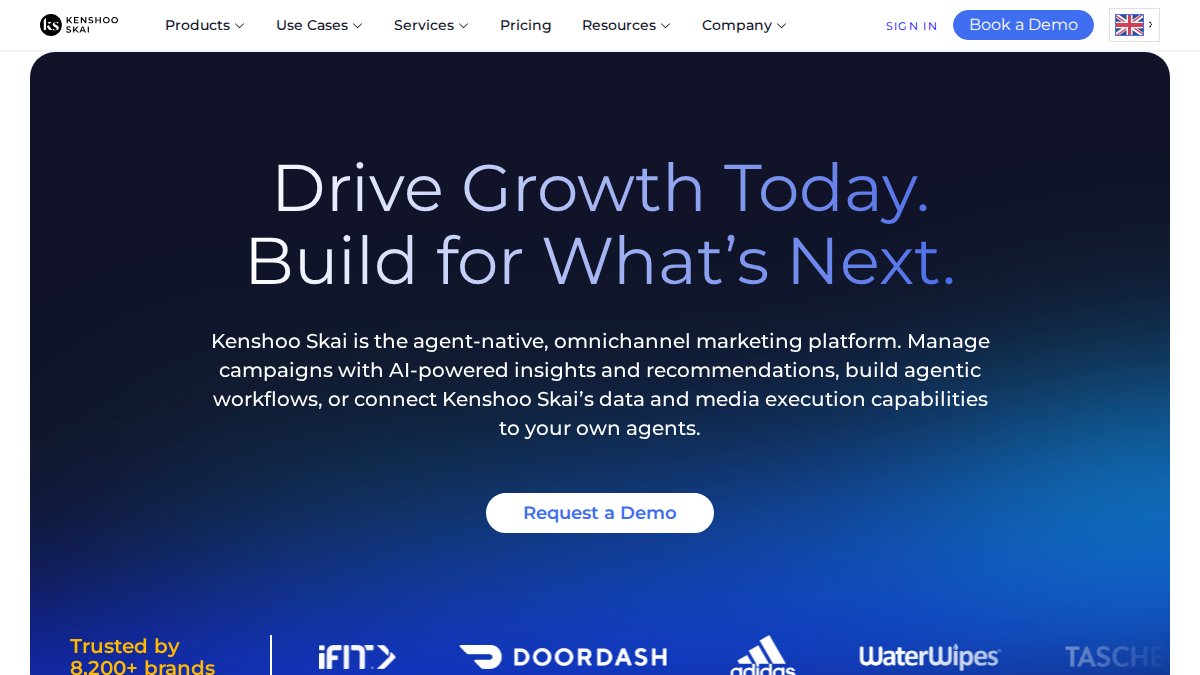
Where it earns its keep is complexity. Teams running dozens of retail media networks alongside search and social get genuine consolidation. The trade-off is the barrier to entry: this is not a tool a two-person team adopts casually, and pricing is quote-based.
Optmyzr and Opteo: Search-Focused PPC Automation
Optmyzr and Opteo solve a narrower problem well: automating search ad optimization. Optmyzr offers automated suggestions for Google and Microsoft Ads, customizable reporting templates, and a library of pre-built scripts.
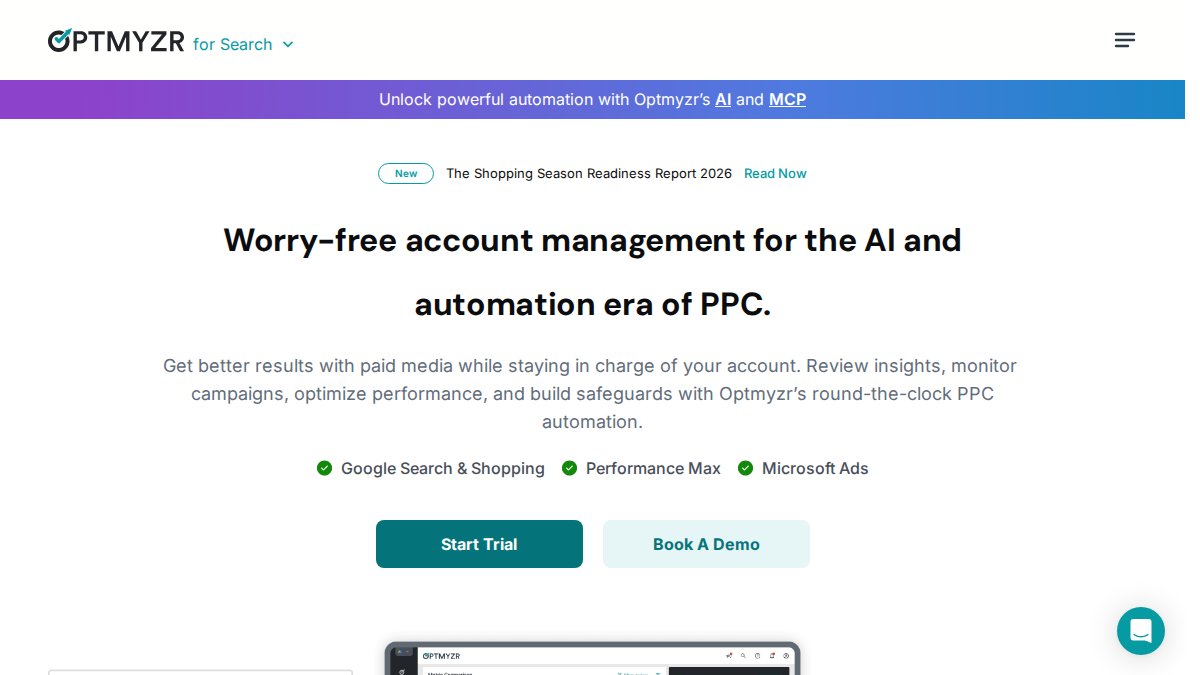
Both are strong for PPC managers who live in search. Neither gives you meaningful social depth, and Opteo does not manage channels beyond Google at all. If search is 80% of your spend, that is fine.
Fluency and Ryze AI: Workflow Automation for Agencies
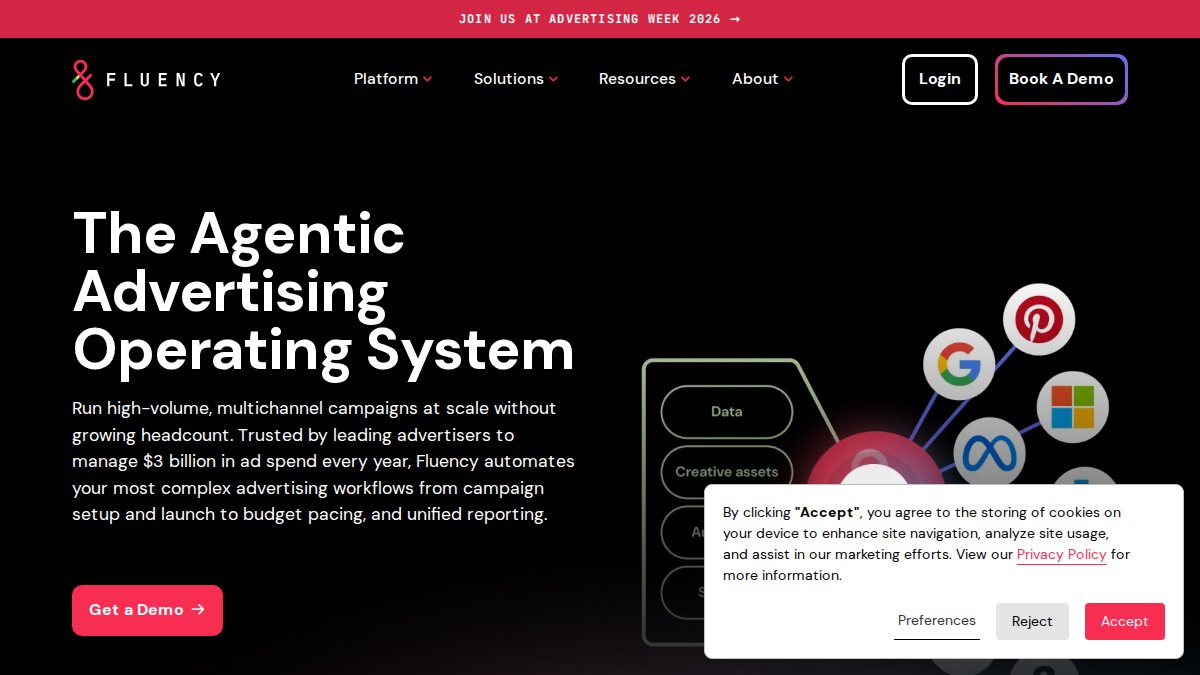
Fluency uses robotic process automation to scale digital advertising operations, automating campaign creation and cross-channel scaling across search and social. It suits agencies managing many accounts at once.
Ryze AI takes a different route: an AI assistant for cross-channel ad management, budget optimization, and multi-platform monitoring, priced at $800/month. Mid-market teams get a clear, transparent price and a friendly interface.
Improvado and Bannerflow: Data Unification and Creative Automation
Most ad management comparisons stop at the ad networks. The harder problem, and the one almost no ranking guide addresses, is connecting ad data to the non-ad systems that explain whether a campaign was actually profitable: your CRM, your inventory system, your margin data, and your subscription or POS records.
Why Non-Ad Data Sources Change the Answer
An ad platform only knows what happened inside its own auction and pixel. It does not know that a SKU is out of stock, that a customer's lifetime value is 4x the first order, or that a channel is driving returns at twice the rate of another. When you feed ad data into a unified model alongside those signals, three things change:
AI Performance Marketing Platform →
- Budget shifts toward margin, not revenue. A campaign with a lower ROAS but higher contribution margin can be the right place to scale. Ad platforms cannot see this on their own.
- Out-of-stock SKUs stop absorbing spend. Inventory feeds let you pause or downweight ads for products that cannot ship, which prevents wasted clicks and refunds.
- Attribution stops lying. CRM and POS data close the loop on purchases that never touch the website pixel, phone orders, in-store pickup, renewals.
A common pattern among mid-market teams is to run ad data through a warehouse (BigQuery, Snowflake, or similar), join it to CRM and inventory tables, and push the resulting segments back into the ad platforms as audience or conversion signals. That round trip is what most "automation" tools skip.
Improvado: The Data Layer
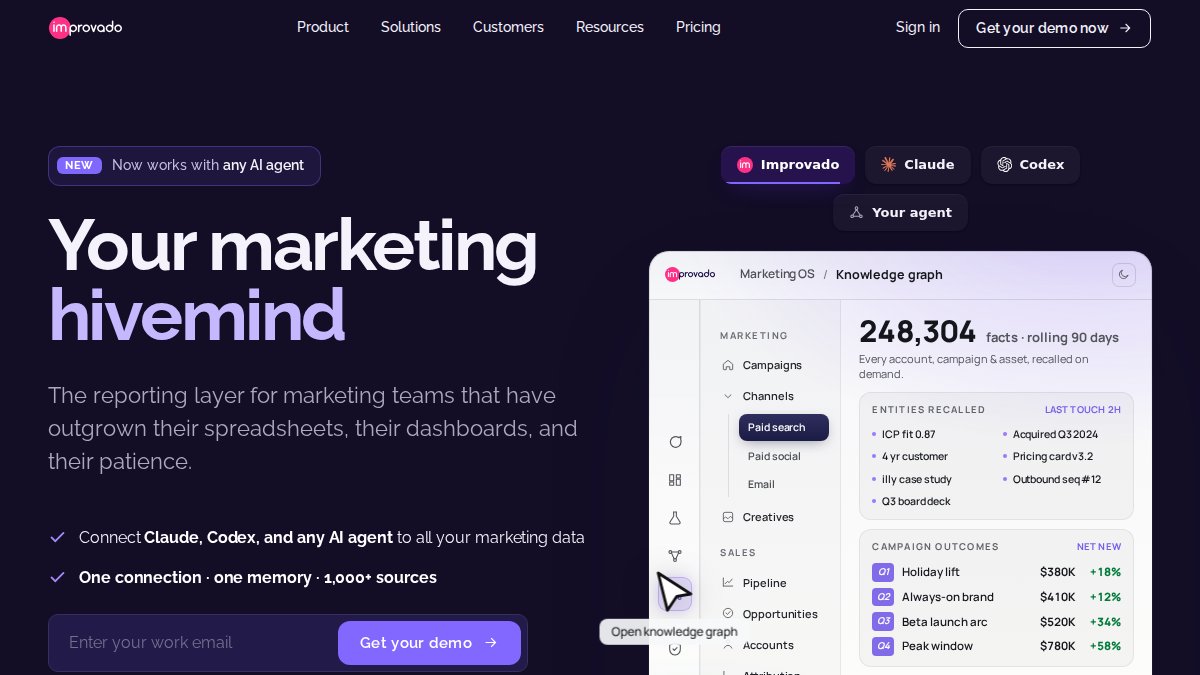
Improvado attacks the data layer directly. It extracts from 300+ marketing and business sources into a unified warehouse, normalizes schemas across platforms, and feeds BI tools, which removes manual spreadsheet reporting entirely.
What it does not do: it does not buy ads, adjust bids, or manage campaigns. It is infrastructure. Teams that buy Improvado expecting a media-buying console are disappointed; teams that buy it to replace a fragile in-house data pipeline get exactly what they paid for.
Bannerflow: The Creative Layer
Bannerflow handles the creative side, automating production and distribution of display and social ads with drag-and-drop templates and real-time A/B testing. For teams where design bottlenecks slow campaign launches, it removes a real constraint, a single creative change can propagate across dozens of ad sizes and placements without a designer touching each one.
What it does not do: media buying strategy, cross-network budget allocation, or attribution. It is a production and distribution tool, not a management platform.
The Integration Question Nobody Asks
Before you commit to either tool, ask one question: can it read from and write back to the systems where your business actually runs?
- Can it pull from your CRM (Salesforce, HubSpot) and your commerce platform (Shopify, BigCommerce)?
- Can it push conversion events back to Meta, Google, and TikTok via their conversion APIs?
- Can it respect inventory and margin constraints when it recommends a budget change?
If the answer to any of those is no, you are still doing manual cross-platform ad management, just with a nicer dashboard. The tools that close the loop between ad platforms and business systems are the ones that actually eliminate the manual work, not just the manual logins. For DTC brands that want that loop closed without assembling a data stack, an AI advertising platform built for e-commerce can be a solution.
How to Measure Offline Conversions for Ecommerce Stores
Measuring offline conversions for ecommerce stores means connecting purchases that happen outside your website, such as phone orders, in-store pickups, or subscription renewals, back to the ad click that caused them.
A practical approach:
- Assign a unique identifier at the point of sale, such as a phone number or order code
- Capture the click ID from your ad URL and store it with the customer record
- Upload offline events to each ad platform using its conversion API
- Match events to campaigns in your unified dashboard, not per-platform
- Review attribution modeling monthly to catch mismatches
Cross-platform measurement tools now unify mobile, web, and connected TV attribution to calculate ROAS and lifetime value without manual BI work, per AppsFlyer's cross-platform measurement guide.
The same logic applies to automated ad optimization software. It only optimizes against the signals it can see. Feed it incomplete conversion data and it will confidently scale the wrong campaign.
Frequently Asked Questions
What are the risks of manual ad management for e-commerce?
Manual cross-platform ad management creates three compounding risks: delayed response to performance shifts, inconsistent budget pacing across channels, and human error in bid adjustments. When one growth marketer spends two hours daily pulling reports, that is two hours not spent optimizing. Research from US Tech Automations (2026) shows agencies are actively abandoning manual reporting because it cannot keep pace with multi-platform campaign complexity. The result is wasted ad spend and missed scaling opportunities.
How does AI-powered ad management improve ROAS?
AI-driven platforms process performance signals across channels in real time, adjusting bids and reallocating budget faster than manual workflows allow. AppsFlyer (2026) reports that cross-platform measurement solutions now unify mobile, web, and CTV attribution data to calculate ROAS without manual BI work. This means budget shifts toward converting audiences within hours instead of days. For DTC brands stuck at a 2.5x ROAS, the speed difference often determines whether a campaign scales or stalls.
What is the difference between multi-channel and cross-channel marketing?
Multi-channel means running campaigns on several platforms independently, each with its own reporting and optimization. Cross-channel means those platforms share data and budget decisions through a unified layer. TheOptimizer (2026) notes that platforms now manage Google Ads, Meta, TikTok, Taboola, and Outbrain from a single interface, replacing manual cross-platform adjustments. For e-commerce brands, cross-channel reduces duplicate spend and ensures attribution modeling reflects the actual customer journey.
When should an e-commerce brand switch to automated ad management?
Switch when manual reporting consumes more than five hours weekly, when you manage three or more ad platforms, or when ROAS plateaus despite increased spend. Two Minute Reports (2026) shows cross-channel platforms now aggregate data from 30+ sources including Shopify and Google Ads without manual API work. If your team is pulling metrics individually from each platform, automation removes that bottleneck and frees time for creative testing and audience targeting strategy.
What features should you look for in a unified marketing platform?
Prioritize four capabilities: cross-channel data synchronization, automated bid optimization and budget pacing, real-time reporting with attribution modeling, and integration with non-ad data sources like your Shopify store or CRM. Wevion (2026) notes that native tools like Meta Ads Manager and Google Ads are built for broad audiences, not media buyers managing dozens of complex campaigns. A platform that connects ad spend to actual conversion data gives you the performance metrics that matter.
Manual ad management does not fail because your team is slow. It fails because fragmented data makes good decisions impossible. NeuroAds Inc. closes that gap with AI-powered ad optimization, predictive targeting, and an integrated Shopify chatbot that recovers shoppers and handles objections before they leave. If your ROAS has plateaued, the fix is not more dashboards. Get started with NeuroAds Inc. and connect the full journey from click to purchase.