
 listicle
Automated Ad Budget Management Tools: 2026 Guide
Table of Contents
- What Automated Ad Budget Management Tools Do
- Key Features of Ad Budget Software
- How to Improve Ecommerce ROAS With Budget Optimization
- PPC Budget Pacing Strategies That Work
- Reducing Ad Spend Waste Through Automation
- Top Automated Ad Budget Management Tools Compared
- 1. NeuroAds Inc.: AI-Powered Optimization for DTC Brands
- 2. Optmyzr: Google Ads Automation at Scale
- 3. Revealbot: Flexible Rule-Based Automation
- 4. Skai: Enterprise Cross-Channel Budget Forecasting
- 5. Marin Software: Unified Bidding Across Channels
- 6. Keen: Predictive Budget Planning and Allocation
- 7. Marmind: Financial Transparency and Budget Tracking
- 8. TheOptimizer: Real-Time Campaign Scaling
- How to Choose the Right Budget Management Tool
- Conclusion
- Frequently Asked Questions
Last Updated: September 4, 2026
Automated ad budget management tools are essential for staying competitive in paid media. These platforms use machine learning to handle budget allocation, freeing your team to focus on strategy. Below, we'll show you how to evaluate them and improve ecommerce ROAS without burning out your media buyers.
Automated ad budget management tools shift spend in real-time based on performance signals. The real differentiator is how the tool connects budget pacing to your conversion funnel, if your landing pages or checkout leak customers, no budget tool can fix that.
What Automated Ad Budget Management Tools Do
Automated ad budget management tools monitor campaign performance and adjust budget allocation, bids, and pacing across ad networks in real-time. They replace manual spreadsheet tracking with algorithmic decision-making that reacts faster than human operators can.
These platforms connect directly to ad accounts through APIs, pulling in data on spend, impressions, clicks, and conversions. They then apply rules or predictive models to decide where the next dollar goes. According to Adobe's 2026 report on AI marketing trends, AI-driven PPC bid management can reduce wasted ad spend by approximately 37% while increasing ad ROI by roughly 50%. That efficiency gain is the difference between a campaign that treads water and one that scales profitably.
Key Features of Ad Budget Software
- Budget pacing: Tools that track daily spend against a monthly goal to prevent overspending and under-delivery.
- Automated alerts: Notifications when a campaign breaches a budget threshold or performance drops below a set floor.
- Cross-channel synchronization: A unified view across Google, Meta, TikTok, and LinkedIn to enable real-time budget reallocation.
- Forecasting: Predictive analytics that model future performance based on historical data and seasonality.
- Ad account integration: Seamless connections to your existing platforms without requiring manual data pulls.
Real-time cross-platform budget reallocation is a key trend, with AI agents increasingly moving spend between channels automatically (Adspirer, 2026). The best tools also centralize campaign data to automate repetitive tasks and provide visual dashboards, a shift noted in the Marmind analysis of marketing budget software. Without these features, your team is left doing the heavy lifting manually, which defeats the purpose of automation.
How to Improve Ecommerce ROAS With Budget Optimization
Improving ecommerce ROAS requires connecting ad spend to downstream revenue signals, not just clicks. Budget optimization means allocating spend to funnel parts that actually convert.
Your ad budget tool should work with your conversion stack and understand which campaigns drive purchases, not just traffic. NeuroAds Inc. pairs AI-powered ad optimization with an integrated Shopify chatbot that handles objections and recovers shoppers, ensuring traffic converts and improving ROAS by fixing conversion gaps.
For ecommerce managers, choose a platform that integrates marketing and financial data so you can see true cost per acquisition, not just the ad platform's reported number.
PPC Budget Pacing Strategies That Work
PPC budget pacing strategies have evolved to AI-driven methods that balance spend across the campaign lifecycle by setting clear thresholds and allowing automation to pause or scale based on real-time CPA and ROAS targets.
- Set a floor and a ceiling: Define minimum daily spend to maintain data volume and maximum to prevent overspending.
- Use algorithmic bidding: Let the platform optimize toward your target CPA rather than manual bids.
- Monitor budget variance: Review daily spend versus the pacing curve to catch under-delivery early.
- Automate rule-based adjustments: Tools like Revealbot pause low-performing ad sets when ROAS drops below threshold, but rules require careful configuration, setting them too tight causes the algorithm to pause campaigns during normal dips.
Predictive models that factor in seasonality and historical trends outperform simple even-pacing methods.
Reducing Ad Spend Waste Through Automation
Ad spend waste comes from non-converting campaigns and misallocated budget. Automation addresses both through real-time monitoring and immediate action.
Companies realize an average return of $5.44 for every dollar spent on marketing automation tools, according to Technology Checker's 2026 marketing automation report. That return is driven by the ability to cut off underperforming spend instantly. For example, in a case study documented by Shirofune, the agency Direct Agents automated its ad operations and reduced manual workload by 63% while increasing marketing qualified leads. That freed-up time was redirected toward strategy, which is where human expertise still matters.
Top Automated Ad Budget Management Tools Compared
Choosing the right tool depends on your ad spend volume, team size, and whether you need tactical bid management or high-level planning. Below, we compare leading options.

1. NeuroAds Inc.: AI-Powered Optimization for DTC Brands
NeuroAds Inc. addresses the full funnel, not just the bid. It connects AI-powered ad optimization with an integrated Shopify chatbot that automates shopper recovery and objection handling, ensuring traffic converts. The platform offers cross-channel campaign management and uses data-driven signals to optimize targeting, bidding, and creative testing. Best for DTC brands and Shopify stores needing unified ad optimization plus conversion tools.
2. Optmyzr: Google Ads Automation at Scale
Optmyzr automates budget pacing and campaign optimization with deep Google Ads integration and advanced automation scripts. The learning curve is steep for beginners. Best for PPC professionals and agencies managing large-scale Google Ads accounts.
3. Revealbot: Flexible Rule-Based Automation
Revealbot offers custom rule-based automation for paid social and search ads, letting you build specific rules to pause or scale campaigns based on ROAS targets. It excels on Meta and TikTok but requires time to configure rules effectively. Best for media buyers needing granular control over automated campaign rules.
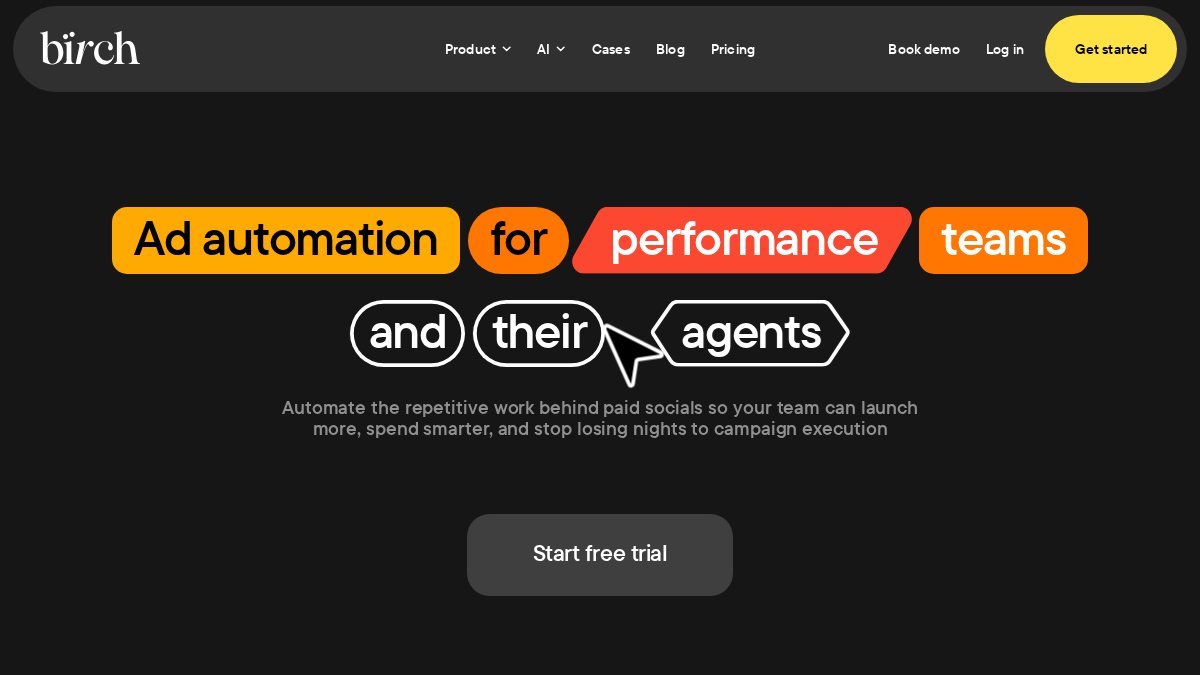
4. Skai: Enterprise Cross-Channel Budget Forecasting
Skai provides advanced budget forecasting and automated optimization with strong cross-channel data integration. Best for large enterprises managing complex, multi-channel advertising budgets.
5. Marin Software: Unified Bidding Across Channels
Marin Software offers automated bidding and budget management for search, social, and e-commerce with strong cross-publisher capabilities. The interface feels dated compared to newer tools. Best for mid-to-large companies requiring sophisticated bidding automation.
6. Keen: Predictive Budget Planning and Allocation
Keen uses predictive modeling for scenario forecasting and channel mix optimization, integrating CRM and sales data. It's not designed for real-time tactical ad management. Best for marketing teams focused on long-term budget planning.
7. Marmind: Financial Transparency and Budget Tracking
Marmind centralizes budget data and automates financial tracking tasks with visual dashboards. It excels at financial transparency but has limited ad-bidding automation. Best for marketing departments managing complex budgets and workflows.
8. TheOptimizer: Real-Time Campaign Scaling
TheOptimizer focuses on scaling profitable campaigns and cutting underperforming spend with fast rule execution across many ad networks. Best for performance marketers and affiliates managing high-volume campaigns.
| Tool | Starting Price | Best For | Standout Feature |
|---|---|---|---|
| NeuroAds Inc. | Free plan available | DTC brands & Shopify stores | AI + Shopify chatbot for conversion |
| Optmyzr | Pricing depends on quantity, dates, and delivery | PPC agencies (Google Ads) | Advanced automation scripts |
| Revealbot | Pricing depends on quantity, dates, and delivery | Media buyers (Meta/TikTok) | Custom rule-building engine |
| Skai | Contact for pricing | Enterprise brands | Cross-channel budget forecasting |
| Marin Software | Contact for pricing | Mid-to-large companies | Unified bidding across publishers |
| Keen | Contact for pricing | Planning-focused teams | Predictive scenario modeling |
| Marmind | Pricing depends on quantity, dates, and delivery | Ops & finance teams | Financial transparency dashboards |
| TheOptimizer | Pricing depends on quantity, dates, and delivery | Affiliates & performance marketers | Real-time scaling rules |
How to Choose the Right Budget Management Tool
Match tool capabilities to your organizational size and ad-spend volume. If you're bleeding spend on low performers, use Revealbot or TheOptimizer. For cross-channel visibility and forecasting, choose Skai or Keen. For conversion-rate bottlenecks, NeuroAds Inc. connects ad optimization with shopper recovery via its Shopify chatbot.
Implementation complexity is often underestimated. Some tools require dedicated media buyer configuration while others offer managed services. Budget for setup time in your evaluation.
Conclusion
Automated ad budget management tools are essential for scaling profitable paid traffic, but they only work when applied to a funnel that converts. The biggest gains come from pairing budget automation with conversion rate optimization. Explore the AI Advertising Platform to see how it connects budget optimization with conversion tools.
Frequently Asked Questions
What are the best AI tools for ad budget management?
The best AI tools depend on your platform mix and team size. NeuroAds Inc. excels for DTC brands needing conversion-focused optimization across channels. Optmyzr suits Google Ads specialists managing large accounts. Revealbot works well for teams running Meta and TikTok campaigns who want granular control. Skai handles enterprise-scale cross-channel allocation. The global AI marketing market reached $57.99 billion in 2026, reflecting the growing demand for these solutions.
How does automated budget allocation improve ROAS?
Automated tools reduce wasted ad spend by approximately 37% while increasing ad ROI by roughly 50%, according to Adobe's 2026 report. They achieve this by pausing underperforming campaigns in real time, reallocating spend to top performers, and adjusting bids based on live conversion data. Real-time cross-platform budget reallocation across Google, Meta, LinkedIn, and TikTok ensures your budget reaches the highest-converting channels automatically, eliminating manual delays and human error.
Can automated tools prevent overspending on PPC campaigns?
Yes. Budget pacing automation sets daily spending caps and automatically pauses campaigns when they approach budget thresholds. Tools like Optmyzr and Revealbot use custom rules to prevent overspending, while Marmind provides centralized budget tracking and automated alerts when spending deviates from forecast. These safeguards are especially critical for smaller teams managing multiple campaigns simultaneously.
What features should I look for in ad spend management software?
Prioritize real-time spend tracking, multi-platform integration (Google, Meta, TikTok, LinkedIn), automated budget pacing, predictive forecasting, and detailed financial reporting. For DTC brands, look for conversion-first optimization and Shopify integration. For agencies, prioritize customizable reporting templates and API access. Data visualization dashboards and automated alerts help teams catch performance issues before they drain budgets. Security and data privacy compliance are non-negotiable for protecting customer information.
How quickly can automated budget tools integrate with my existing ad accounts?
Integration speed varies by platform. Most tools connect to Google Ads and Meta within minutes using API authentication. Cross-platform synchronization takes longer if you manage accounts across five or more networks. NeuroAds Inc. offers comprehensive integration support to streamline setup. Budget software platforms like Marmind focus on centralizing data to automate repetitive tasks, reducing manual data entry and accelerating the onboarding process for marketing operations teams.
For DTC and e-commerce brands, the most effective approach is to connect your ad spend directly to a conversion strategy that captures and recovers shoppers. NeuroAds Inc. delivers this through its AI advertising platform, which combines cross-channel campaign optimization with an integrated Shopify chatbot that handles objections and automates shopper recovery. Get started with NeuroAds Inc. and see how connecting budget optimization to your conversion funnel improves your ROAS.
This article was written using GrandRanker
Frequently Asked Questions
Q: What are the best AI tools for ad budget management?
A: The best AI tools depend on your platform mix and team size. NeuroAds Inc. excels for DTC brands needing conversion-focused optimization across channels. Optmyzr suits Google Ads specialists managing large accounts. Revealbot works well for teams running Meta and TikTok campaigns who want granular control. Skai handles enterprise-scale cross-channel allocation. The global AI marketing market reached $57.99 billion in 2026, reflecting the growing demand for these solutions.
Q: How does automated budget allocation improve ROAS?
A: Automated tools reduce wasted ad spend by approximately 37% while increasing ad ROI by roughly 50%, according to Adobe's 2026 report. They achieve this by pausing underperforming campaigns in real time, reallocating spend to top performers, and adjusting bids based on live conversion data. Real-time cross-platform budget reallocation across Google, Meta, LinkedIn, and TikTok ensures your budget reaches the highest-converting channels automatically, eliminating manual delays and human error.
Q: Can automated tools prevent overspending on PPC campaigns?
A: Yes. Budget pacing automation sets daily spending caps and automatically pauses campaigns when they approach budget thresholds. Tools like Optmyzr and Revealbot use custom rules to prevent overspending, while Marmind provides centralized budget tracking and automated alerts when spending deviates from forecast. These safeguards are especially critical for smaller teams managing multiple campaigns simultaneously.
Q: What features should I look for in ad spend management software?
A: Prioritize real-time spend tracking, multi-platform integration (Google, Meta, TikTok, LinkedIn), automated budget pacing, predictive forecasting, and detailed financial reporting. For DTC brands, look for conversion-first optimization and Shopify integration. For agencies, prioritize customizable reporting templates and API access. Data visualization dashboards and automated alerts help teams catch performance issues before they drain budgets. Security and data privacy compliance are non-negotiable for protecting customer information.
Q: How quickly can automated budget tools integrate with my existing ad accounts?
A: Integration speed varies by platform. Most tools connect to Google Ads and Meta within minutes using API authentication. Cross-platform synchronization takes longer if you manage accounts across five or more networks. NeuroAds Inc. offers comprehensive integration support to streamline setup. Budget software platforms like Marmind focus on centralizing data to automate repetitive tasks, reducing manual data entry and accelerating the onboarding process for marketing operations teams.