 blog
How to Use an AI Media Buying Platform to Scale ROAS
Last Updated: November 1, 2026
Quick Summary
An AI media buying platform uses machine learning to plan, bid, target, and reallocate ad spend across channels with limited manual input, automating bidding, budget pacing, audience targeting, and creative testing. To scale ROAS, connect your ad accounts and storefront, verify conversion tracking, set guardrails, and expect at least 30 days of data before models perform.
- Nearly 60% of U.S. ad buyers had used or planned to use AI-powered buying products.
- Most platforms need at least 30 days of campaign data to build initial models.
- Automated bidding starves underperforming ad sets of budget in hours, not days.
- Set a dollar threshold above which any budget change needs human sign-off.
- Expect the first month of setup to produce learning, not lift.
Table of Contents
- Why AI Media Buying Platforms Are Replacing Manual Campaign Management
- What an AI Media Buying Platform Actually Does
- How AI Media Buying Tools Compare Across Channels and Budgets
- What to Check Before You Commit to AI Ad Optimization
- The AI Media Buyer: What It Automates and What Still Needs a Human
- AI Tools for E-commerce Advertising: Matching the Stack to Your Store
- Setting Up Your AI Media Buying Platform for the First 90 Days
- Frequently Asked Questions
Why AI Media Buying Platforms Are Replacing Manual Campaign Management
Nearly 60% of U.S. ad buyers had used or planned to use AI-powered buying products, according to EMARKETER's AI media buying research.
An AI media buying platform is software that uses machine learning to plan, bid, target, and reallocate ad spend across channels with limited manual input.
Here's the part most guides get wrong: automation doesn't remove the media buyer.
What an AI Media Buying Platform Actually Does
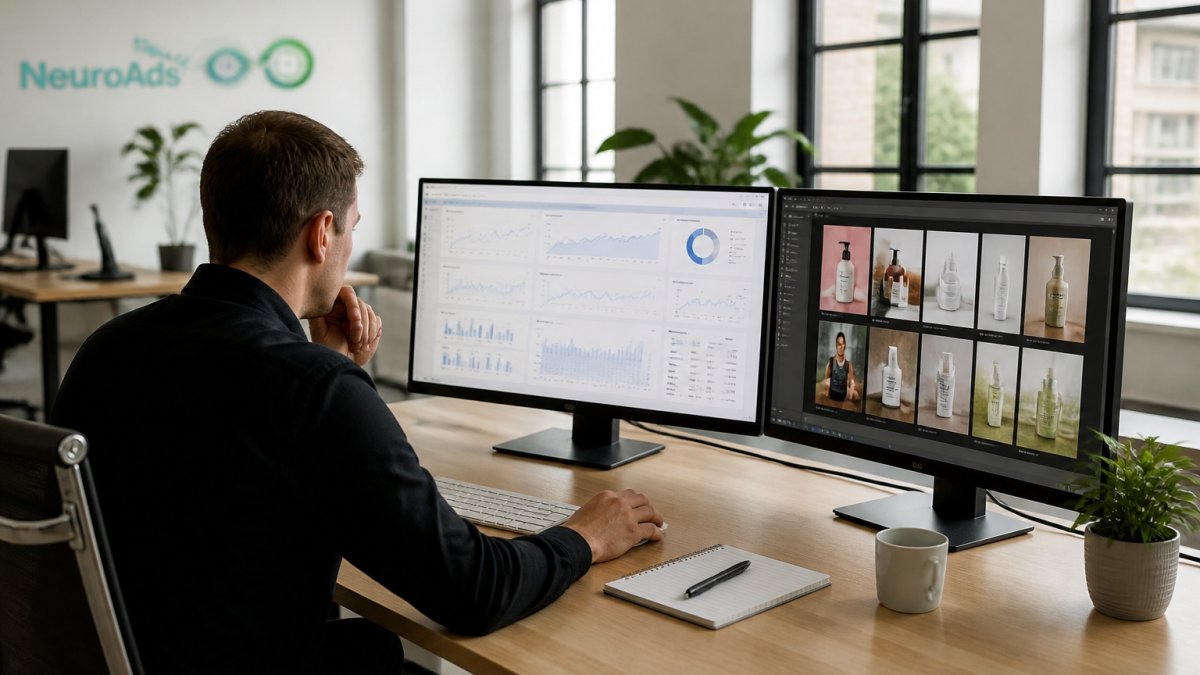
An AI media buying platform automates four core functions: bidding, budget pacing, audience targeting, and creative testing. It reads performance signals in real time, then adjusts spend toward whatever is converting.
Automated Bidding and Budget Allocation
Automated bidding sets and adjusts bids per impression based on predicted conversion likelihood. Budget allocation goes further: it shifts spend between campaigns and channels as performance changes, rather than waiting for a weekly review. The practical effect is that underperforming ad sets get starved of budget in hours, not days.
Audience Targeting and Creative Testing
According to Smartly.io's 2026 Digital Advertising Trends Report, 46% of marketers use AI to scale creative. That's the function at work: fewer manual uploads, faster feedback on which ad earns the click.
How AI Media Buying Tools Compare Across Channels and Budgets
Channel coverage is where AI media buying tools differ most. Some platforms concentrate on Meta Ads and Google. Others extend to TikTok Ads, LinkedIn Ads, and programmatic inventory through demand-side platform access. For a deeper look, see our comparison of cross-channel AI platforms vs single-channel tools for DTC.
Channel coverage by platform type
| Platform Type | Channel Coverage | Best For | Main Trade-off |
|---|---|---|---|
| Single-channel AI tool | One network | Teams mastering one channel | Siloed reporting |
| Cross-channel AI platform | Meta, Google, TikTok, programmatic | DTC brands scaling paid media | Longer setup |
| Full agency replacement | Broad, managed | Brands without in-house buyers | Less day-to-day control |
The pricing models you will actually be quoted
Pricing models vary across vendors, and the model matters as much as the headline number because it determines how cost behaves as you scale. NeuroAds Inc. pricing depends on your spend, scope and plan; visit the NeuroAds Inc. website for current pricing or a quote. The common models in this category are:
Total cost of ownership beyond the subscription
The subscription is rarely the whole cost. Build a total cost of ownership estimate that includes:
- Implementation and onboarding. Whether the vendor charges for setup, and whether you need an internal engineer or a paid integrator to complete tracking and data connections.
- Tracking and data infrastructure. Server-side tagging, a consent management platform, and clean conversion event definitions are prerequisites, and they carry their own cost in tools and hours.
- Creative production. Platforms that test creative at volume only pay off if you can feed them variants. Budget for production, not just media.
- People time. Someone still has to review recommendations, approve budget changes, and own strategy. Automation reduces hours; it does not eliminate the role.
- Exit and migration. Confirm whether historical data, audience definitions, and campaign structures export cleanly if you leave.
Matching the tool to your spend and team
Budget size changes the calculus.
A simple decision frame:
- Small business, single channel, modest spend: a single-channel AI tool inside the ad platform you already use is usually the right first step. Keep reporting manual until you add a second channel.
- Growing DTC brand, two to three channels: a cross-channel platform earns its keep once manual budget shuffling between channels becomes a weekly job.
- Agency, multiple clients: prioritize usage-based or seat-based pricing and per-client data separation over raw channel count.
- Enterprise, broad channel mix: weight governance, approval workflows, and audit trails as heavily as optimization features.
What to Check Before You Commit to AI Ad Optimization
Data quality is the first gate. EMARKETER's guidance on AI media buying names data-quality checks, cross-platform interoperability, and governance as prerequisites before deploying these systems at scale. Skip that groundwork and the model learns from noise.
But most buying guides stop at a checklist. The two questions that actually separate a platform you can live with from one you regret are: what does it take to get live, and how much can it do without you? Here is how to evaluate both.
Implementation requirements and time to value
Ask every vendor the same five questions before you sign:
- What tracking has to exist first? At minimum, a verified conversion event per channel, a documented attribution model, and consent handling that matches your legal obligations. If server-side tagging is required, confirm who builds it.
- What integrations are supported out of the box? Your ad accounts, your storefront or CRM, and your analytics stack. Custom API work is a hidden cost and a schedule risk.
- How long is the learning period? Improvado's analysis of AI media buying platforms notes most platforms need at least 30 days of campaign data to build initial models, and 90 or more days for accurate predictions. Any vendor promising instant results is overselling.
- What expertise does day-to-day operation require? Some platforms assume a media buyer who can interpret recommendations; others are built for operators with no paid media background. Be honest about which you have.
- What does onboarding include? A guided setup, a named contact, and a documented first-30-days plan are worth more than a feature list.
Human control, approval workflows, and failure safeguards
This is the evaluation criterion most reviews skip, and it is the one that determines whether you sleep well. Automation is only as safe as its guardrails. Confirm, in writing:
AI Performance Marketing Platform →
- What the platform can change autonomously. Bid adjustments and budget pacing are routine. Budget increases above a threshold, new campaign launches, and audience expansion should not be.
- What requires approval. Define a dollar threshold above which any budget change needs a human sign-off, and confirm the platform enforces it rather than merely displaying it.
- How guardrails are set. Maximum daily spend, maximum bid, excluded placements, and brand-safety lists should all be configurable and visible.
- Whether changes can be rolled back. Ask how to revert a budget change or pause an automated rule, and how quickly.
- What alerts exist. Spend spikes, tracking failures, and policy rejections should trigger a notification, not a silent loss.
- What the audit trail shows. Every automated change should be logged with a timestamp and a reason, so you can reconstruct what happened.
The pre-signature checklist
- Conversion tracking verified across every channel
- Attribution model documented and agreed internally
- Pricing model understood: flat fee, spend-based, usage-based, or hybrid
- Total cost of ownership modeled at projected twelve-month spend
- Implementation requirements and onboarding scope confirmed in writing
- Time-to-value milestones agreed at day 30, 60, and 90
- Approval workflows defined for budget changes above a set threshold
- Rollback and pause procedures documented
- Data governance and consent handling reviewed
- Exit terms and data portability confirmed
Watch out: pricing that scales with ad spend can look cheap at pilot volume and expensive at scale. Model the cost at your projected spend before you commit.
The AI Media Buyer: What It Automates and What Still Needs a Human
An AI media buyer handles routine tasks such as bidding and pacing. Brand strategy, offer positioning, and creative concepts remain human work.
Campaign objectives still need a person to set them. A platform optimizing for click-through rate will happily deliver cheap clicks that never convert.
Most teams land on a hybrid model. If you're weighing options, compare an AI advertising platform vs a traditional ad agency. Let the platform run daily bid optimization and spend reallocation.
AI Tools for E-commerce Advertising: Matching the Stack to Your Store
Store maturity should drive your choice of AI tools for e-commerce advertising. A brand spending five figures monthly has different needs than one spending six.
Early-stage stores get the most from a platform that fixes conversion before it chases reach. If your product pages convert poorly, more traffic just buys more expensive proof of the problem.
One integration detail matters more than most reviews admit: the connection between your ad platform and your storefront. The Shopify AI Chatbot and the AI Advertising Platform connect ad optimization to the customer journey from click to purchase.
Setting Up Your AI Media Buying Platform for the First 90 Days
Setup follows a predictable arc. For the full walkthrough, see scaling paid traffic on Shopify.
Days 1-30: Connect ad accounts and your storefront. Verify conversion tracking end to end. Set campaign objectives and guardrails.
Days 31-60: Review the platform's early recommendations against your own read of the data. Begin automated bidding on your strongest campaigns first.
Days 61-90: Expand automation to secondary channels. Compare cost per acquisition and return on ad spend against your pre-platform baseline.
Frequently Asked Questions
What is an AI media buying platform?
An AI media buying platform is software that automates parts of paid media planning and execution: bidding, budget pacing, audience targeting, creative testing, and cross-channel allocation. It pulls performance data from ad networks, builds models from your campaign history, and adjusts spend toward the placements and audiences most likely to convert. Most platforms need a period of campaign data to build useful models, so expect a ramp-up period before you judge results.
How do AI media buying tools handle multiple ad platforms?
Ask any AI media buying tool which ad networks it connects to natively and how it pulls impressions, clicks, conversions, and cost data into one view. The value is in cross-channel campaigns: the platform can shift budget from a channel with rising cost per acquisition to one with headroom. Ask two questions before buying: which advertising channels are supported natively, and whether attribution and conversion tracking stay consistent across them. Fragmented data is the most common reason cross-channel automation underperforms.
Will an AI media buyer replace human media buyers?
No. An AI media buyer automates bid optimization, spend reallocation, and reporting, but humans still set campaign objectives, approve creative, and decide how much risk to take. Data-quality checks, cross-platform interoperability, and governance are prerequisites for deploying these systems at scale, and those are human responsibilities. The practical split: let the platform handle real-time optimization and performance optimization loops, and keep approval workflows for budget changes above a threshold you set.
How long before AI ad optimization improves ROAS?
Ask each vendor for its expected learning period in writing before you start. Before you start, confirm your conversion tracking and attribution are clean, since the model learns from those signals. Set a baseline ROAS and cost per acquisition first, then compare against it at the 30 and 90 day marks. Advertisers should also expect to review creative and audience segmentation inputs during the ramp-up, not just wait for the algorithm.
Scaling return on ad spend gets harder every quarter as auction competition tightens. NeuroAds Inc. builds the AI advertising platform that connects predictive targeting, cross-channel campaign management, and conversion-first optimization in one system, with a Shopify chatbot that handles shopper objections before they become lost sales. Get started with NeuroAds Inc. and turn your paid traffic into profitable customers.