 Comparison
Creative Testing AI Platform: Which One Fits Your Ad Workflow
Last Updated: November 9, 2026

Quick Summary
A creative testing ai platform predicts how an ad will perform before you spend on media, then tracks whether that prediction held up. The strongest programs combine pre-launch prediction, live campaign testing, and synthetic audience testing, with 70% of creative analysis AI-driven and 30% human-led. NeuroAds Inc. ranks first for DTC teams because its creative testing is tied to Shopify conversion signals.
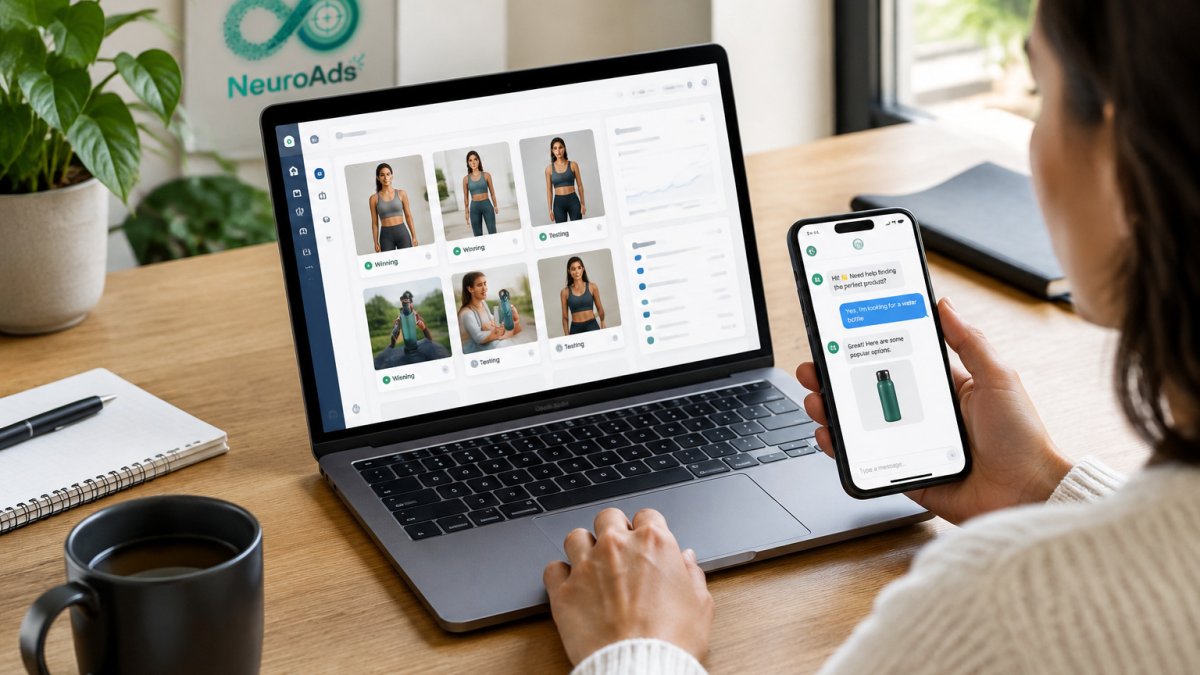
- NeuroAds Inc. closes the loop against Shopify order and conversion data, making it our top pick for DTC brands.
- Alison.ai scores creative against your own past results, so newer brands without a performance baseline get less from it.
- Freeze the prediction before launch, hold a control, and compare results at a fixed 30-day window.
- Anchor your validation loop to the KPI the business is paid on, not click-through rate alone.
- Weekly ad testing services range from $288 to $60,000 annually, so rigor varies enormously across providers.
Table of Contents
- What a Creative Testing AI Platform Actually Does
- The Five Platforms Compared at a Glance
- AI Creative Testing Tools Reviewed One by One
- Creative Testing Methods: Pre-Launch, Live, and Synthetic
- Ad Creative Performance Analysis After the Launch
- Creative Testing Best Practices That Hold Up Under Spend
- Where Each Platform Wins for DTC Teams
- Connecting Your Creative Testing Platform to Your Store
- Frequently Asked Questions
What a Creative Testing AI Platform Actually Does
A creative testing AI platform predicts how an ad will perform before you spend a dollar on media, then tracks whether that prediction held up. According to HubSpot's State of Marketing, 80% of marketers now use AI for content creation, and 90% of advertisers use generative AI in creative workflows, per Digital Applied's 2026 advertising survey. That volume creates a new problem: too many creative assets, too little signal.
A creative testing AI platform addresses this by scoring advertising creative against audience response models, historical results, or synthetic users. Below, we break down five platforms, the creative testing methods behind them, and where each one fits.
The Five Platforms Compared at a Glance
The table below applies the same five criteria to every platform: testing methodology, pricing transparency, validation against real outcomes, integrations, and where the tool stops being useful.

| Platform | Testing Approach | Pricing Model | Validation Against Real Outcomes | Integrations | Best For | Key Limitation |
|---|---|---|---|---|---|---|
| NeuroAds Inc. | Creative testing tied to store conversion signals | Free plan available; contact for pricing | Closes the loop against Shopify order and conversion data | Shopify, Google, TikTok, Meta, Pinterest, email events | DTC and Shopify brands | Built for ecommerce; less useful without a storefront |
| Alison.ai | Scores against your own past results | Contact for pricing | Self-referential; depends on the depth of your historical archive | Not detailed in available material | Brands with deep historical data | Newer brands lack the baseline it needs |
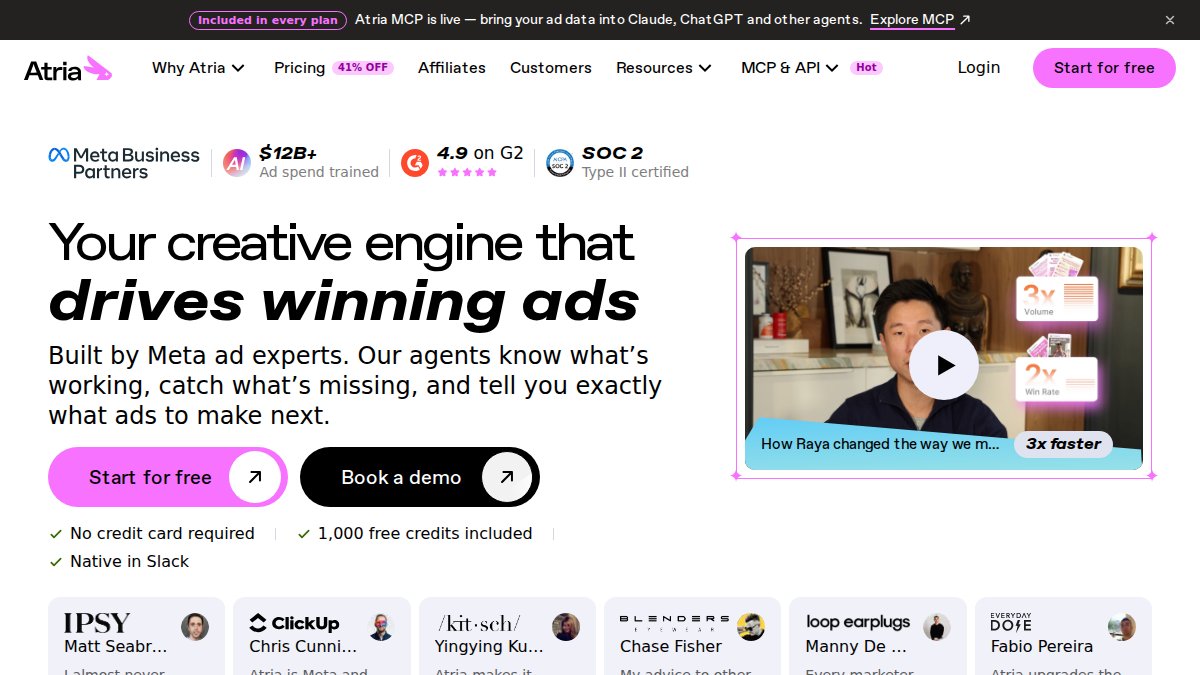
| Atria | Creative intelligence plus ad workflow | Contact for pricing | Not detailed in available material | Workflow and production tools; ad-platform connections not detailed | Teams wanting workflow and testing together | Methodology not published; treat as workflow-first |
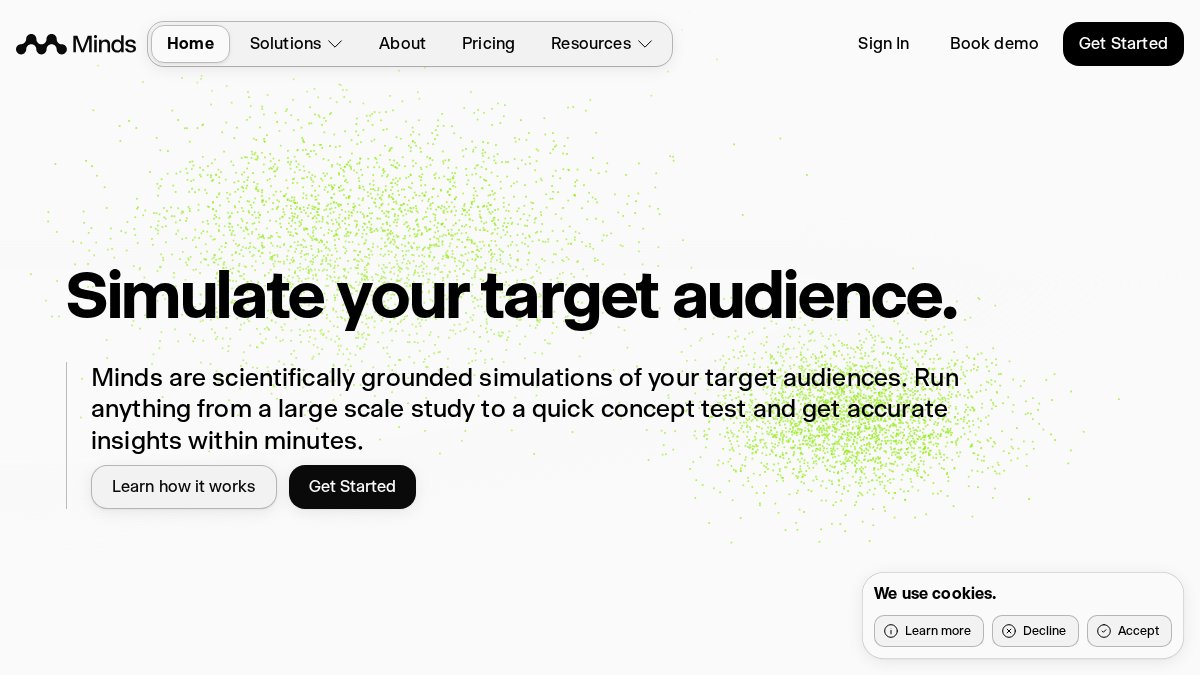
| Minds | Ad creative testing | Pay as you go | Not detailed in available material | Not detailed in available material | Usage-based testing | No published validation benchmarks |
| Ask Rally | Synthetic-audience testing | Contact for pricing | Synthetic predictions; live validation not detailed | Not detailed in available material | Teams testing with AI personas | Persona predictions need real-world confirmation |
Three patterns stand out when you read the table by column rather than by row. First, pricing transparency varies: several platforms require a sales conversation before you learn anything about cost, and a platform that will not quote a model up front may carry minimum commitments or setup fees that surface late.

Second, validation is where the field separates. A prediction engine is only as good as its feedback loop. Alison.ai validates against your own history, which is useful but circular if your history is thin. Atria, Minds, and Ask Rally do not publish enough methodology in the available material to judge how their predictions are checked against live campaign performance.
Third, integrations decide whether testing findings actually reach the campaign. The practical question is not whether a platform can score creative but whether the score lands where media buyers work: ad accounts, analytics, and the store itself. Ask any vendor to show the handoff from test result to campaign decision before you sign.
For a wider field, see our roundup of 7 Shopify AI advertising platforms that scale ROAS, or the fuller AI advertising platform for ecommerce brands comparison.
AI Creative Testing Tools Reviewed One by One
Each platform below earns its place for a different reason. We evaluated all five on the same criteria: testing methodology, pricing transparency, validation against real outcomes, integrations, and where the tool stops being useful.
NeuroAds Inc.: Creative Testing Wired Into the Store
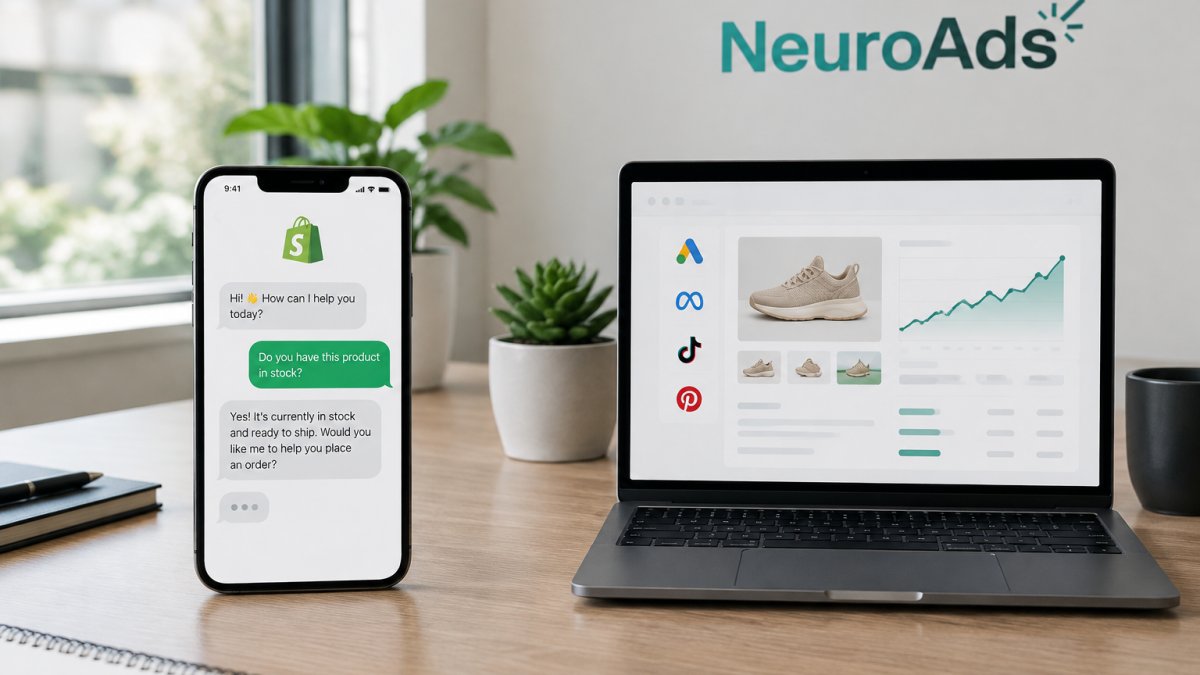
Our top pick for DTC teams. NeuroAds Inc. offers AI-powered ad optimization and predictive targeting. Its Shopify chatbot is designed to capture leads and handle objections before shoppers leave.
The honest limitation: this is built for ecommerce. A brand without a storefront gets less from the conversion-first model. See how it works in practice with our NeuroAds creative testing how-to guide, or read the full NeuroAds review for DTC brands.
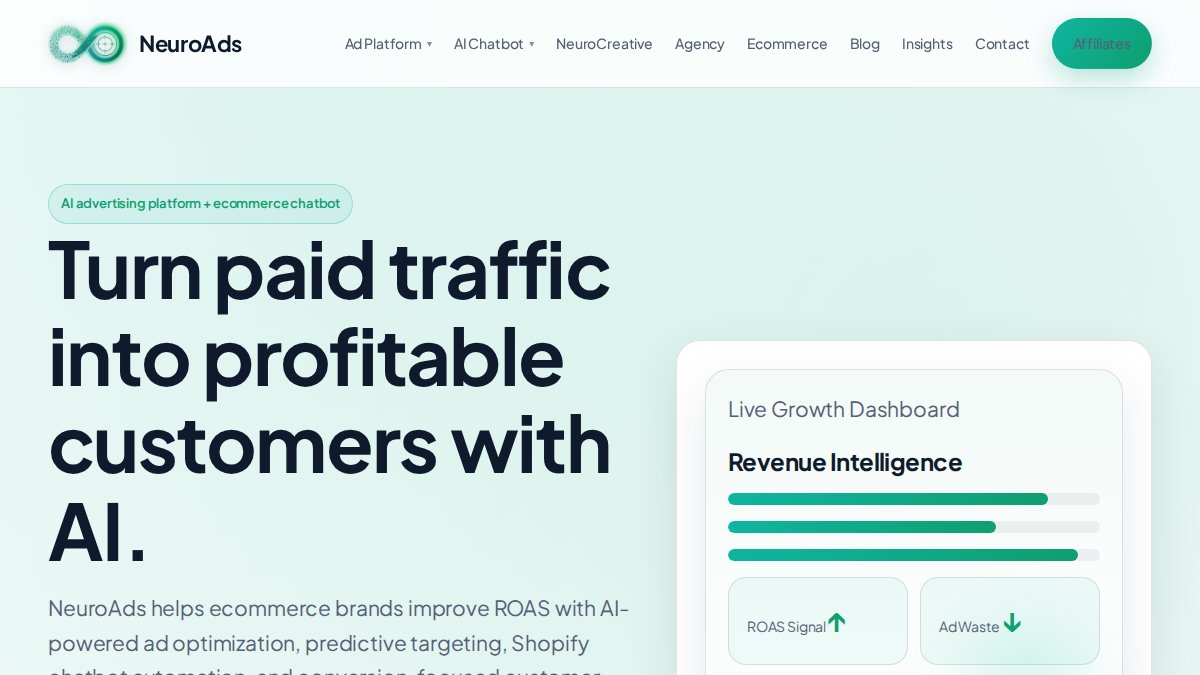
Best for: Shopify and DTC brands that want creative testing connected to revenue. Skip if: you run lead-gen campaigns with no ecommerce conversion data.
Alison.ai: Scoring Against Your Own Past Results
Best for: advertisers with substantial historical creative data. Skip if: you are a newer brand without a performance baseline.
Atria, Minds, and Ask Rally: Workflow, Usage Pricing, and Synthetic Audiences
None of the three publishes detailed methodology in the available material. Treat all three as workflow and pricing alternatives rather than validated prediction engines.
Creative Testing Methods: Pre-Launch, Live, and Synthetic
Three creative testing methods dominate, and they answer different questions. Pre-launch testing predicts performance before spend. Live campaign testing measures real audience response as ads run. Synthetic testing uses AI personas to rank concepts without any media spend at all.
The strongest programs combine them. A hybrid model works best: Toluna's creative testing research describes a 70/30 split, with 70% of creative analysis AI-driven and 30% human-led to catch qualitative nuance. Pure automation misses brand-specific judgment. Pure human review cannot keep pace with the volume of ad content modern campaigns demand.
Ad Creative Performance Analysis After the Launch
Post-launch analysis is where most creative testing programs quietly fail. Teams score a concept, launch it, then never close the loop, so the model never learns whether its prediction was right.
A workable validation loop has four parts, and each one can be run without a data science team.
1. Freeze the prediction before launch. Record the platform's score, the audience segment it was scored against, and the KPI you expect it to move. A prediction you cannot retrieve later is not a prediction, it is a memory.
2. Hold a control. Run the predicted winner against your current best-performing creative, not against nothing. Without a control, a strong result tells you the ad worked but not whether the platform's ranking was better than your own judgment.
3. Compare at a fixed window. Thirty days is a common checkpoint for ecommerce because it captures repeat purchase behavior without letting seasonality swamp the signal. Compare the predicted ranking against the actual ranking by the same KPI, and note where the two diverged.
4. Feed the divergence back. The useful output is not a pass or fail but a pattern: which creative attributes the model overrated, which audiences it misread, and which formats it handles poorly. Retire or recalibrate any model that drifts across two or three consecutive cycles.
The lesson for smaller brands is not to expect those numbers but to demand the same discipline: validate predictions against your own outcomes, not a vendor's benchmark. A model that is 90% accurate on a vendor's dataset can be badly wrong on a niche audience, a new category, or a cultural moment the training data never saw.
Watch out: validating against click-through rate alone will teach the model to optimize for curiosity, not conversion, so anchor the loop to the KPI the business is actually paid on.
Creative Testing Best Practices That Hold Up Under Spend
Start with a fixed testing cadence, not a one-off audit. Weekly ad testing services range from $288 to $60,000 annually, per Pixair AI's pricing analysis, which tells you the spread in rigor is enormous.
- Define one KPI per test before launch
- Test one variable at a time: visual, ad copy, or message
- Hold audience segments constant across variants
- Validate synthetic predictions against live results within 30 days
- Document every result in a shared creative library
- Review emotional response and attention data, not just clicks
Watch out: testing creative without a control group produces confident conclusions with no baseline behind them.
Where Each Platform Wins for DTC Teams
DTC brands need creative testing tied to purchase data, which is why we rank NeuroAds Inc. first. Alison.ai wins when you have years of historical results to score against. Atria suits teams that want workflow and intelligence together.
Minds fits brands that test sporadically and prefer usage-based billing. Ask Rally is the pick for concept screening with synthetic users before committing media spend. Industry trends point toward pre-launch simulation of attention and engagement, per Entropik's 2026 creative trends report, so expect these categories to converge.
Connecting Your Creative Testing Platform to Your Store
Integration is the step teams underestimate. A creative testing platform is only as good as the data it reads, and for ecommerce that means Shopify orders, ad accounts, and email events flowing into one place.
One governance note: AI-generated creative may not qualify for copyright protection without sufficient human authorship, per the U.S. Copyright Office guidance on AI. Keep human oversight in the loop for legal reasons as well as qualitative ones. If you want help wiring testing into your store, get in touch with NeuroAds about AI advertising and Shopify automation.
The gap between brands that scale paid traffic profitably and those stuck at flat ROAS usually comes down to feedback speed. Creative testing that never touches store data is guesswork with extra steps. NeuroAds Inc. closes that loop with AI-powered ad optimization, predictive targeting, and an integrated Shopify chatbot that recovers shoppers and handles objections before they leave. Get started with NeuroAds Inc. and turn every creative test into a measurable lift in return on ad spend.
Frequently Asked Questions
Can AI predict which ad creative will perform best?
It can rank creative before spend, with limits. Model accuracy reflects how well a model matches known outcomes, not a guarantee for a brand-new audience. Treat scores as a shortlist filter: launch the top two or three variants, then let live results decide. Keeping a human in the loop helps preserve brand nuance.
What is the difference between AI creative testing and live ad testing?
AI creative testing happens before spend. A creative testing AI platform scores ad content, visual assets, and messaging against historical results, synthetic users, or attention models, so weak concepts never reach a campaign. Live ad testing runs real ads to real audience segments and measures clicks, conversions, and ROAS. The two work as a sequence: pre-launch scoring cuts the number of variants you pay to test, and live campaign testing confirms the prediction. Skipping the first step means paying for every lesson.
What should you look for in a creative testing platform?
Start with the comparison basis. Some tools score ads against your own historical results, others against synthetic audiences or broad benchmarks, and that choice changes how much you trust the output. Then check pricing model: usage-based plans suit low-volume testing, while flat or contact-based pricing fits teams running weekly tests. Confirm integrations with your ad accounts and store, and ask how predictions get validated against real outcomes. Finally, check whether post-launch ad creative performance analysis lives in the same tool, or you will stitch reports together by hand.
How do you measure the results of creative testing?
Pick your KPI before the test starts. For DTC brands, that usually means ROAS, conversion rate, and cost per acquisition, with click-through and engagement as early signals. Run each variant long enough to clear normal week-to-week noise, and compare against your own response benchmarks rather than industry averages. Log the AI platform's pre-launch score next to the live outcome for every test; over a few months that log shows whether the model's recommendations actually track your results, which is the only validation that matters for your account.