 how-to
How to Fix Conversion Gaps in Paid Traffic: 2026 Guide
Table of Contents
- Step 1: Audit Traffic Sources and Conversion Tracking
- Step 2: Run an Ecommerce Funnel Drop-Off Analysis
- Step 3: Apply Best Practices for Ad Landing Page Optimization
- Step 4: Simplify Forms and Cut Friction After the Click
- Step 5: Learn How to Improve Shopify Conversion Rate With Chat Automation
- Step 6: Fix Attribution Modeling for Multi-Touch Journeys
- Step 7: Fix Quality Score and Retargeting Before Scaling Spend
- Conclusion
- Frequently Asked Questions
Last Updated: September 20, 2026
Step 1: Audit Traffic Sources and Conversion Tracking
According to EXTERNAL_LINK: Activate Digital Media's analysis of [paid media drop-offs | activatedigitalmedia.com], 80% of paid traffic disappears without converting. That number should bother you. It means most ad budgets buy clicks that never turn into customers. This guide from NeuroAds Inc. shows you how to fix conversion gaps in paid traffic, step by step.
A conversion gap is the distance between the people who click your ad and the people who actually buy. The wider that gap, the more money you waste. Fixing it starts with your data, not your creative.
Start your audit with these checks:
- Confirm conversion events fire on every platform
- Match event timestamps between your ad account and analytics
- Check for missing parameters like click IDs and UTMs
- Compare reported conversions against actual orders
Fix Delayed Events and Missing Parameters
Delayed events and missing parameters are the most common cause of fake conversion gaps. Per Cometly's breakdown of conversion tracking errors, inaccurate tracking from delayed events or missing parameters creates artificial gaps in performance reporting.
In practice, this means your ads may look worse than they are. Fix it by sending server-side events with the identifiers each ad platform needs. Then re-check your numbers before you touch bids or budgets.
Model Multi-Touch Attribution Before You Trust Last-Click Data
Most stores still credit the last click, which hides the ads that started the journey. If a shopper clicks a paid social ad on Monday, browses your site, then converts via branded search on Friday, last-click attribution gives all credit to the organic search visit. Your paid social campaign looks like a loser when it actually drove the sale.
This is the attribution gap competitors miss. They tell you to check your pixel and stop there. But fixing conversion gaps in paid traffic requires understanding the full path a customer takes.
Here's how to audit multi-touch attribution:
- Pull a path analysis report from your analytics platform showing the sequence of touchpoints before each conversion
- Compare how many conversions have at least two paid touchpoints versus a single paid click
- Identify which campaigns appear early in the journey but never get credit under last-click
- Check whether your ad platform's modeled conversions align with your analytics platform's view
A common pattern is that upper-funnel campaigns (video views, awareness ads) show poor last-click ROAS but strong assisted-conversion numbers.
Segment by Traffic Source Before You Diagnose
Not all paid traffic behaves the same. A conversion gap on Google Search looks different from one on Meta or TikTok. Before you change anything, segment your conversion rate by source:
- Search campaigns often convert on the first click because intent is high
- Social campaigns typically need multiple touches before conversion
- Display and video campaigns rarely convert directly but assist heavily
Step 2: Run an Ecommerce Funnel Drop-Off Analysis
An ecommerce funnel drop-off analysis shows exactly where shoppers leave between click and purchase. Map each stage, then count how many people move to the next one.
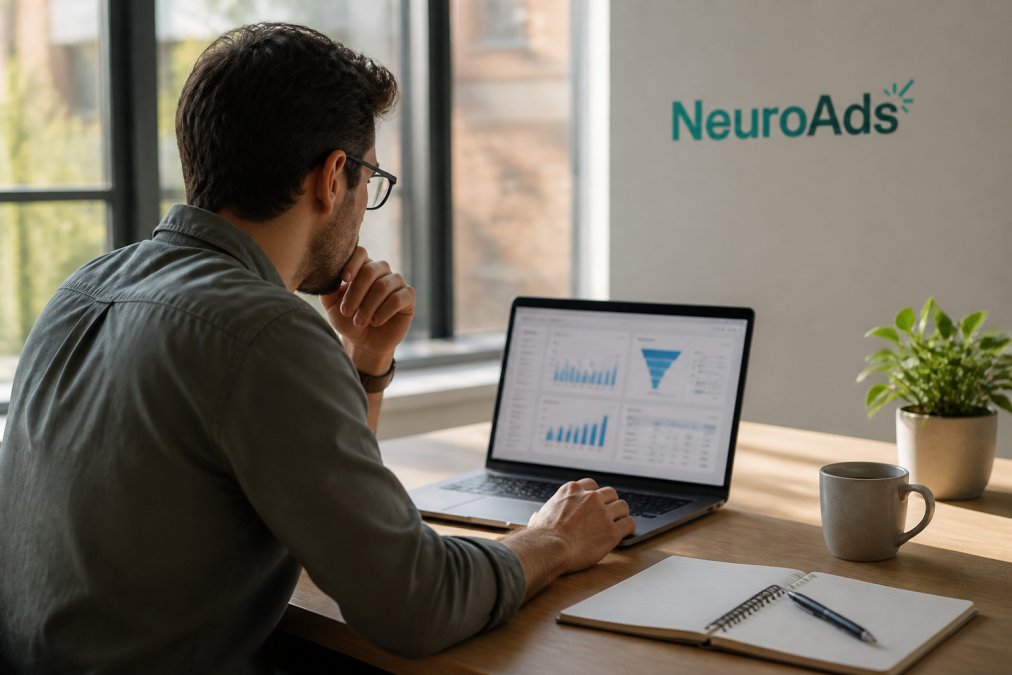
Track these stages:
- Ad click to landing page view
- Landing page view to product page
- Product page to add-to-cart
- Cart to checkout start
- Checkout start to purchase
Read Bounce Rate and Time on Page Correctly
Bounce rate and time on page tell you whether visitors found what your ad promised. A high bounce rate on a landing page usually means a message mismatch, not bad traffic. Low time on page with high exits points to slow loading or confusing layout. Read both metrics together before you change anything.
Step 3: Apply Best Practices for Ad Landing Page Optimization
Best practices for ad landing page optimization come down to one rule: give visitors exactly what the ad promised, fast. Every percentage point of landing page conversion is worth 30% to 70% more pipeline than the same spend on extra traffic, according to Digital Applied's 2026 landing page data.
Focus on these fixes:
AI Performance Marketing Platform →
- Put your main offer above the fold
- Repeat the ad's core promise in the headline
- Cut distracting navigation and outbound links
- Show one clear call to action
- Load the page in under three seconds
Match Ad Copy to Landing Page Headlines
Ad message match means the headline on your landing page echoes the exact words in your ad. When a shopper clicks "50% Off Running Shoes" and lands on a generic homepage, they leave. Keep the offer, the wording, and the visual consistent from ad to page. This single fix closes more gaps than most redesigns.
Use Psychological Triggers to Close the Gap Between Click and Conversion
Social proof reduces risk. When a shopper sees that 2,000 people bought the same product this month, or reads a review from someone with the same problem, the perceived risk of buying drops. Place social proof near the call to action, not buried in a footer. Specific numbers and names outperform generic "trusted by thousands" claims.
Extend the Post-Click Experience Beyond the Landing Page
Most guides stop at the landing page. But the conversion gap often continues after the click, through email, SMS, and retargeting. A visitor who doesn't buy on the first visit isn't necessarily lost. They may need a follow-up sequence that answers objections, offers a discount, or simply reminds them.
Connect your landing page to a post-click nurture flow:
- Capture email before checkout for visitors who show exit intent
- Trigger an abandoned cart email within one hour of abandonment
- Serve retargeting ads that reference the exact product viewed
- Use SMS for time-sensitive offers if the visitor opted in
Step 4: Simplify Forms and Cut Friction After the Click
Every extra form field costs you conversions. Research from Discovered Labs' B2B conversion study found that simplifying forms and improving visibility lifted conversions by 15% to 120%.
Cut friction with these moves:
- Ask only for email and name at checkout
- Offer guest checkout for first-time buyers
- Show shipping costs before the final step
- Enable autofill and wallet payments
- Remove forced account creation
Step 5: Learn How to Improve Shopify Conversion Rate With Chat Automation
Learning how to improve Shopify conversion rate often means answering objections before shoppers leave. Most visitors who hesitate never come back. A chatbot that engages them in the moment recovers sales you'd otherwise lose.
Use chat automation to:
- Answer sizing, shipping, and return questions instantly
- Trigger a discount when a shopper shows exit intent
- Capture emails from visitors who don't buy
- Route complex questions to a human
Step 6: Fix Attribution Modeling for Multi-Touch Journeys
Attribution modeling for multi-touch journeys assigns credit across every touchpoint a customer sees. Most stores still credit the last click, which hides the ads that started the journey.
| Attribution Model | What It Credits | Best For |
|---|---|---|
| Last click | Final touchpoint | Simple funnels |
| First click | First touchpoint | Awareness campaigns |
| Linear | All touchpoints equally | Long journeys |
| Data-driven | Modeled credit | Multi-channel spend |
Step 7: Fix Quality Score and Retargeting Before Scaling Spend
Quality score and retargeting decide whether scaling actually pays off. A low quality score raises your cost per click and shrinks your reach. Retargeting brings back shoppers who almost bought. Fix both before you raise budgets.
Improve quality score with:
- Tighter keyword and ad group relevance
- Higher landing page experience scores
- Better click-through rate on your ads
Conclusion
Conversion gaps in paid traffic rarely come from one broken thing. They come from tracking errors, weak message match, clunky forms, and missing follow-up. Fix the leaks before you spend another dollar on reach.
Frequently Asked Questions
Why am I getting clicks but no conversions on my paid traffic?
Clicks without conversions usually point to a message match or landing page problem, not a traffic problem. Activate Digital Media's 2026 analysis found conversion gaps are frequently caused by misalignment between ad messaging and landing page content, slow page speeds, and complex form structures. Check whether your ad headline matches your landing page headline, whether the page loads in under three seconds, and whether your form asks for more fields than the offer justifies. Fixing those three items often recovers a meaningful share of lost conversions before you touch bids or budgets.
How do I identify where users drop off in my ecommerce funnel?
Map each step from ad click to purchase, then measure the drop between steps. In 2026, attribution fragmentation from zero-click search and AI-driven journeys makes this harder, so compare platform-reported conversions against Shopify order data. If the gap between ad platform conversions and actual orders is large, your tracking is inflating results. If the drop happens between add-to-cart and checkout, the problem is page speed, shipping cost surprise, or form friction. Fixing conversion gaps starts with knowing which step leaks.
Is a 2.5% conversion rate good for paid ecommerce traffic?
It depends on your category and traffic source, but Digital Applied's 2026 landing page data recommends measuring your conversion gap against the top quartile of performers rather than the median. That comparison shows how much room you actually have. The same research found every percentage point of landing page conversion is worth 30% to 70% more pipeline than the same investment in additional traffic, so a 2.5% rate that could be 4% is costing you more than a bigger ad budget would gain.
How can AI tools help fix conversion gaps in paid traffic?
AI tools help in two places: ad optimization and post-click recovery. On the ad side, predictive targeting and automated creative testing adjust bids and audiences using performance signals faster than manual review. On the post-click side, a Shopify chatbot can answer objections and recover abandoned carts before shoppers leave. Discovered Labs reported 15% to 120% conversion lifts from form simplification and AI-driven visibility improvements, which shows the post-click layer is where much of the recoverable gap sits.